
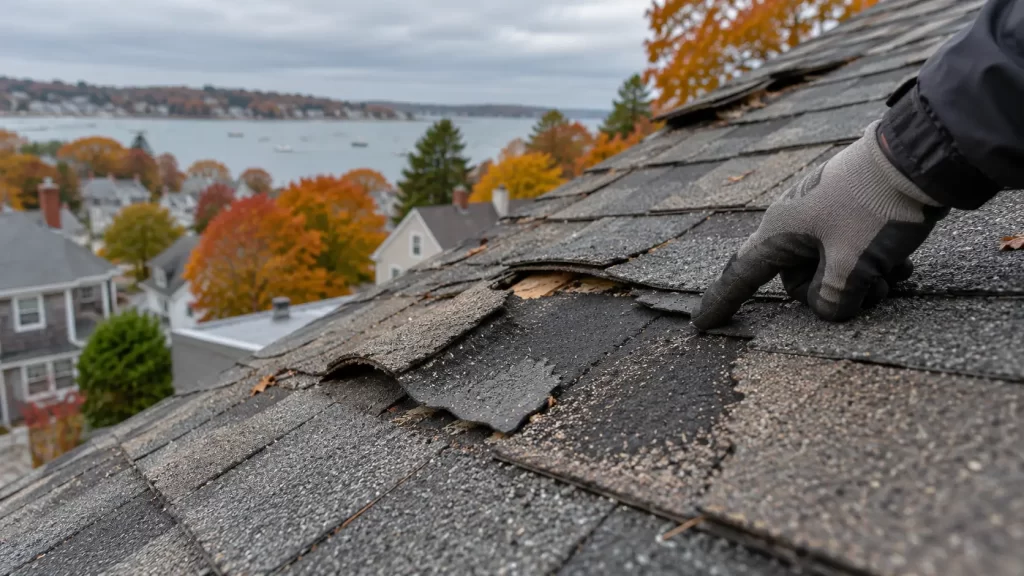
Your roof is your home’s first line of defense against New England’s harsh weather, but it can’t protect you if it’s compromised. For Beverly homeowners, fall is the critical window to identify and address roof damage before winter’s freezing temperatures, heavy snow, and ice turn minor issues into major disasters. At Over The Top Roofing, we’ve spent 25+ years helping North Shore families recognize the warning signs of roof damage and take action before costly repairs become inevitable.
Early detection is everything. A small crack in flashing or a few missing shingles might seem insignificant in October, but when winter arrives with its freeze-thaw cycles and ice dam formation, those minor vulnerabilities become entry points for water, moisture, and structural damage. Beverly’s coastal location adds another layer of risk—salt air accelerates corrosion, wind events are more severe, and humidity increases the potential for mold and rot once water infiltrates your roofing system.
Most homeowners don’t realize their roof is damaged until a leak appears inside their home. By that point, the damage has already spread through shingles, underlayment, roof decking, insulation, and potentially into walls and ceilings. The repair costs multiply exponentially. That’s why learning to spot early warning signs—both exterior and interior—is one of the smartest investments you can make in your home’s longevity and your family’s safety.
This guide will walk you through the most common signs of roof damage in Beverly homes, explain why coastal conditions make early detection even more critical, and show you exactly what to do if you spot problems. With Over The Top Roofing’s expertise and industry-leading warranties backing your repairs, you can face winter with confidence knowing your home is fully protected.
Summary:
- Why Early Detection of Roof Damage Matters in Beverly
- Exterior Warning Signs Beverly Homeowners Should Never Ignore
- Missing, Cracked, or Curling Shingles
- Granules Accumulating in Gutters
- Damaged or Rusted Flashing
- Sagging Roof Lines or Uneven Surfaces
- Interior Signs of Roof Damage You Can Check from Inside
- Water Stains on Ceilings and Walls
- Attic Moisture, Mold, or Musty Odors
- Daylight Visible Through Roof Boards
- Coastal Weather in Beverly: Unique Roof Damage Risks
- What to Do If You Spot Roof Damage in Beverly
- How Over The Top Roofing Can Help Protect Your Beverly Home
- FAQ: Identifying Roof Damage in Beverly, MA
Why Early Detection of Roof Damage Matters in Beverly
Beverly’s location on the North Shore exposes homes to unique weather challenges that accelerate roof aging and damage. Coastal wind events, salt air corrosion, and high humidity combine to stress roofing materials year-round. Add New England’s temperature extremes—summer heat that bakes shingles and winter cold that freezes moisture into expanding ice—and you have conditions that exploit every weakness in your roof’s defense system.
Early detection prevents the cascade effect of roofing failure. A damaged shingle allows water beneath the surface. That water saturates underlayment and decking. When temperatures drop, the water freezes and expands, cracking wood and creating larger gaps. More water enters during the next rain or snowmelt. The cycle repeats and intensifies until you’re facing structural damage, interior leaks, mold growth, and thousands of dollars in emergency repairs that could have been avoided with a simple fall fix.
Insurance considerations make early detection even more important. Homeowners insurance typically covers sudden, storm-related damage but may deny claims for gradual deterioration caused by deferred maintenance. If you wait until winter to address a problem that existed in fall, insurers may argue the damage was pre-existing and maintenance-related, reducing or denying your claim. Documented inspections and timely repairs from a licensed contractor like Over The Top Roofing protect your coverage and your financial investment.
Beverly’s historic homes and diverse architecture present additional detection challenges. Older homes may have layered roofing systems, unconventional flashing installations, or materials no longer commonly used. Multi-level roofs, dormers, and complex valley systems create more potential failure points. That’s why a professional roof inspection in Beverly is invaluable—trained eyes catch issues that homeowners miss, and professional documentation protects your investment.
Exterior Warning Signs Beverly Homeowners Should Never Ignore
From ground level or using binoculars, you can spot many early warning signs of roof damage without ever climbing a ladder. Regular visual inspections—especially in fall before winter and spring after winter—help you catch problems early when repairs are simpler and less expensive. Here are the most critical exterior signs that demand immediate attention.
Missing, Cracked, or Curling Shingles
Shingles are your roof’s armor, and any compromise in their integrity creates vulnerability. Missing shingles leave underlayment and decking exposed to the elements, allowing water to penetrate with no protection. Even a single missing shingle can lead to extensive interior damage if winter moisture seeps through. High winds from coastal storms frequently lift and remove shingles, especially on older roofs or installations with inadequate fastening.
Cracked shingles indicate aging, thermal stress, or impact damage from debris. Cracks allow water infiltration and will expand during freeze-thaw cycles, turning small fissures into large failures. Curling shingles—where edges lift or the center bubbles—signal advanced aging and loss of adhesive bond. Curled shingles catch wind more easily, increasing the likelihood they’ll blow off entirely during the next storm. They also channel water beneath the shingle surface rather than shedding it properly.
If you notice any shingle damage, document it with photos and contact expert roof repair services in Beverly immediately. What looks like a few damaged shingles often indicates broader deterioration that only a professional inspection can fully assess. October is the ideal time for repairs—moderate temperatures and dry conditions allow proper installation before winter weather makes repairs difficult or impossible.
Granules Accumulating in Gutters
Asphalt shingles are coated with ceramic granules that protect against UV rays, provide fire resistance, and shed water. As shingles age, they lose granules—a normal process that accelerates near the end of a roof’s lifespan. Checking your gutters and downspouts for granule accumulation is one of the simplest and most revealing DIY roof assessments you can perform.
Excessive granule loss appears as dark, sandy sediment in gutters or piles of grit at downspout exits. If you see significant accumulation, your shingles are losing their protective coating and becoming vulnerable to accelerated wear. Bare spots on shingles—visible as dark patches where granules have worn away—indicate advanced aging. Once granules are gone, the asphalt layer beneath deteriorates rapidly from UV exposure and moisture, leading to cracking, curling, and failure.
Granule loss after a single storm might indicate hail damage, which insurance typically covers. Gradual granule loss over months or years signals aging and the need for complete roof replacement in Beverly. Over The Top Roofing can assess whether your granule loss is normal aging or indicates a warranty-covered defect, helping you understand your options and make informed decisions about repair versus replacement.
Damaged or Rusted Flashing
Flashing—metal or rubberized material that seals roof transitions and penetrations—is one of the most common failure points on Beverly roofs. Flashing surrounds chimneys, skylights, vent pipes, dormers, and valley channels. It’s designed to direct water away from vulnerable joints, but when flashing corrodes, separates, or cracks, water flows directly into your roof’s interior layers.
Beverly’s coastal salt air accelerates metal corrosion, particularly on older galvanized steel or aluminum flashing. Rust spots, holes, or flaking metal are clear signs of compromised flashing. Separation from roofing materials—visible as gaps or lifting edges—allows water to slip beneath shingles. Cracked or brittle caulk around flashing joints indicates aged sealant that no longer provides waterproof protection.
Inspect flashing carefully in fall, ideally with binoculars if you’re staying off the roof. Look for rust discoloration, gaps, or lifting edges around chimneys and skylights. Check valley flashing for dents or damage. If you spot any flashing issues, act quickly. Flashing repairs are relatively inexpensive and straightforward in fall but become emergency repairs in winter when leaks appear. Over The Top Roofing specializes in flashing restoration and replacement, ensuring watertight seals that protect your home through decades of New England weather.
Sagging Roof Lines or Uneven Surfaces
A sagging roofline is a serious warning sign that indicates potential structural damage. Roofs should have consistent, straight lines along ridges and eaves. Any dips, sags, or uneven areas suggest that the underlying roof decking or structural supports have been compromised—usually by long-term water damage, excessive snow load, or inadequate support.
From the street or yard, look at your roofline from multiple angles. Compare both sides for symmetry. Check for any areas that appear lower than surrounding sections. Sagging often appears near roof valleys, around chimneys, or where large sections of decking have rotted from hidden leaks. Interior inspections of your attic can reveal the extent of damage—look for sagging or wet roof boards, visibly damaged rafters, or compressed insulation.
Sagging roofs require immediate professional assessment. They pose safety risks and indicate that damage has progressed beyond surface repairs. Over The Top Roofing will conduct a thorough structural evaluation to determine if repairs can stabilize the roof or if replacement is necessary. Never ignore sagging—it worsens rapidly and can lead to catastrophic failure, especially under heavy snow loads that Beverly experiences during winter storms.
Interior Signs of Roof Damage You Can Check from Inside
While exterior inspections reveal surface damage, interior inspections catch problems that have already penetrated your roof’s protective layers. These signs indicate active or past water infiltration and demand immediate attention. Conduct interior inspections in fall using a flashlight in your attic and by examining ceilings and walls throughout your home.
Water Stains on Ceilings and Walls
Water stains—discolored patches, rings, or streaks on ceilings and walls—are definitive proof that water has penetrated your roof and entered your living space. Stains may appear brown, yellow, or copper-colored and often have darker edges. Even if a stain appears dry and old, it indicates a vulnerability that will likely leak again during winter precipitation.
Water doesn’t always travel straight down. It can follow rafters, run along pipes, or track across attic floors before dripping into your home. A stain in one room might indicate roof damage twenty feet away. That’s why professional inspections are critical—tracing the source of a leak requires expertise and knowledge of how water behaves inside roof structures.
If you discover water stains, note their location and contact Over The Top Roofing immediately. Don’t assume a dry stain means the problem is resolved. Most roof leaks are intermittent, appearing during heavy rain or snowmelt and disappearing during dry periods. Our team will trace the leak to its source, assess the extent of damage, and provide comprehensive repairs that address both the roof failure and any interior damage caused by water infiltration.
Attic Moisture, Mold, or Musty Odors
Your attic is the early warning system for roof problems. Inspect your attic in fall for signs of moisture, mold growth, or musty odors. Look for water stains on roof decking or rafters, damp insulation, visible mold or mildew, and condensation on nails protruding through the roof deck. Any of these signs indicate moisture infiltration that threatens your roof’s structural integrity and your home’s air quality.
Mold growth on wood surfaces signals chronic moisture problems. Mold not only damages wood but also poses health risks to your family. Musty odors, even without visible mold, indicate hidden moisture that creates ideal conditions for mold growth and wood rot. Damp or compressed insulation loses its insulating value and can harbor mold, requiring replacement along with roof repairs.
Inadequate ventilation can cause attic moisture even without roof leaks, but moisture combined with other signs—stains, damp wood, or visible damage—points directly to roof failure. Over The Top Roofing assesses both roof condition and ventilation during inspections, ensuring your attic remains dry and your roof performs optimally through every season. Addressing moisture problems now prevents exponentially more expensive remediation and structural repairs later.
Daylight Visible Through Roof Boards
If you can see daylight through your roof boards while standing in your attic, you have significant roof damage that requires immediate repair. Visible light indicates gaps, holes, or missing shingles that expose your home to weather, pests, and water infiltration. Even small pinholes of light represent failure points that will expand rapidly under winter conditions.
Inspect your attic on a bright day with lights off. Look up at the roof decking from below. Any light penetration—whether bright spots or subtle glows—demands urgent attention. Check especially around roof penetrations like vents, chimneys, and plumbing stacks where improper installation or deteriorated flashing commonly creates gaps.
Daylight visibility often indicates damage from storms, fallen branches, or animal intrusion. It may also signal severely deteriorated roofing materials that have reached the end of their lifespan. Whatever the cause, immediate repair is non-negotiable. Contact Over The Top Roofing for emergency evaluation and temporary weatherproofing if needed, followed by permanent repairs that restore your roof’s integrity before winter weather arrives.
Coastal Weather in Beverly: Unique Roof Damage Risks
Beverly’s coastal location creates roofing challenges that inland communities don’t face. Salt air is highly corrosive to metal components—flashing, fasteners, gutters, and roof vents deteriorate faster than in non-coastal areas. Routine inspections must pay special attention to metal corrosion, which compromises watertight seals and structural integrity.
Wind events are more severe near the coast. Nor’easters, tropical systems, and winter storms bring sustained high winds and powerful gusts that test every fastener, shingle seal, and flashing joint. Older roofs or those with previous repairs may have weak points that coastal winds exploit. Beverly homeowners should inspect roofs after every significant wind event, looking for lifted shingles, displaced flashing, or debris damage.
Humidity and moisture exposure are elevated near the ocean. Higher moisture levels accelerate mold growth, wood rot, and material deterioration. Roofs in Beverly must contend with salt-laden fog, driving rain, and freeze-thaw cycles that intensify moisture-related damage. Proper ventilation and prompt leak repairs are even more critical in coastal environments where moisture problems escalate quickly.
Unique architectural features in Beverly’s historic neighborhoods—steep pitches, slate or tile materials, decorative trim, and complex roof lines—require specialized expertise for damage assessment and repair. Over The Top Roofing’s 25+ years of experience includes extensive work on Beverly’s diverse housing stock, from historic colonials to modern coastal homes. We understand the specific challenges coastal roofs face and design repairs and replacements that deliver decades of reliable protection.
What to Do If You Spot Roof Damage in Beverly
If you identify any warning signs of roof damage, act immediately. Document what you’ve observed with photos, noting locations and dates. Avoid climbing onto your roof—it’s dangerous, especially on steep pitches or when surfaces are wet or covered with leaves. Professional roofers have safety equipment and training to assess damage without risk.
Contact Over The Top Roofing at (978) 854-3418 for a comprehensive inspection. We offer fast scheduling and can often accommodate same-week appointments for urgent concerns. Our inspection process is thorough, examining both obvious and hidden damage, and we provide detailed reports with photos, condition assessments, and transparent repair recommendations. You’ll understand exactly what’s wrong, why it matters, and what it will cost to fix—no surprises, no pressure.
If damage is severe or leaks are active, ask about temporary weatherproofing measures. Emergency tarping or temporary seals can protect your home while permanent repairs are scheduled. Over The Top Roofing prioritizes urgent repairs to prevent further damage, and our team works efficiently to restore your roof’s integrity before winter weather intensifies.
Review repair recommendations carefully and ask questions. Understand the difference between repairs that extend your current roof’s life and situations where replacement is the smarter investment. Our team provides honest guidance based on your roof’s condition, age, and long-term performance expectations. We never upsell unnecessary services—our reputation is built on integrity, quality, and transparent communication.
Once repairs are complete, establish a regular inspection schedule. Over The Top Roofing offers comprehensive roofing services in Beverly, including maintenance plans that keep your roof in optimal condition year-round. Preventive care costs a fraction of emergency repairs and ensures your roof delivers its full expected lifespan.
How Over The Top Roofing Can Help Protect Your Beverly Home
For 25+ years, Over The Top Roofing has been Beverly’s trusted partner for roof inspections, repairs, and replacements. Our founder, Elias Junior, brings decades of hands-on roofing expertise to every project, and our team of 14 skilled professionals shares that commitment to quality and integrity. We treat every Beverly home like our own, delivering craftsmanship backed by industry-leading warranties that few competitors can match.
We specialize in all roofing types common to Beverly homes—asphalt shingle, metal, rubber, and slate. Our expertise extends to complex repairs, flashing restoration, gutter services, and complete roof replacements. We understand Beverly’s coastal challenges and design solutions that withstand salt air, wind, and moisture for decades. Our work is fully licensed and insured, giving you peace of mind that your investment is protected.
Transparent communication defines our service. From initial inspection through project completion, you’ll know exactly what’s happening, why it’s necessary, and what it costs. We provide detailed written estimates with no hidden fees, and we’re always available to answer questions or address concerns. Our goal is your complete satisfaction and confidence in your roof’s performance.
Don’t wait for minor damage to become a winter emergency. Contact Over The Top Roofing today at (978) 854-3418 to schedule your fall roof inspection. We’ll help you identify problems early, recommend cost-effective solutions, and ensure your Beverly home is fully protected before the first snowfall. Your home deserves the best, and we deliver it with every inspection, every repair, and every roof we install.
FAQ: Identifying Roof Damage in Beverly, MA
What are the most common early signs of roof damage in Beverly, MA?
The most common early signs include missing or damaged shingles, granule loss in gutters, cracked or rusted flashing, water stains on interior ceilings, and sagging roof lines. Beverly’s coastal location also means salt air corrosion and wind damage are frequent issues that homeowners should monitor closely.
How can I check for roof damage from the ground?
Use binoculars to inspect your roof from ground level. Look for missing or curled shingles, damaged flashing around chimneys, uneven roof lines, and debris accumulation. Check gutters for shingle granules, which indicate aging or damage. If you spot any concerns, schedule a professional inspection rather than climbing onto the roof yourself.
Can small roof damage turn into bigger problems in winter?
Absolutely. Small cracks, loose shingles, or minor flashing gaps allow moisture infiltration that worsens dramatically in winter. Freeze-thaw cycles expand damage, and ice dams exploit vulnerabilities. What starts as a small leak in fall can become extensive structural damage, mold growth, and interior destruction by spring.
When should I call a professional roofer in Beverly?
Contact a professional immediately if you notice water stains, missing shingles, sagging areas, or visible damage. Don’t wait for leaks to worsen. Over The Top Roofing offers fast inspections and can address issues before winter weather arrives. Call (978) 854-3418 for same-week service in Beverly.
Does homeowners insurance cover roof damage in Beverly?
Coverage depends on the cause of damage. Storm damage and sudden events are typically covered, but gradual wear from deferred maintenance may not be. A documented inspection history strengthens insurance claims. Over The Top Roofing provides detailed reports that satisfy insurance requirements and protect your claim eligibility.
How often should I inspect my roof in Beverly?
Inspect your roof twice annually—in spring after winter and in fall before winter. Additionally, check after major storms or high-wind events. Beverly’s coastal location means increased exposure to salt air and wind, making regular inspections even more important for long-term roof health.
