
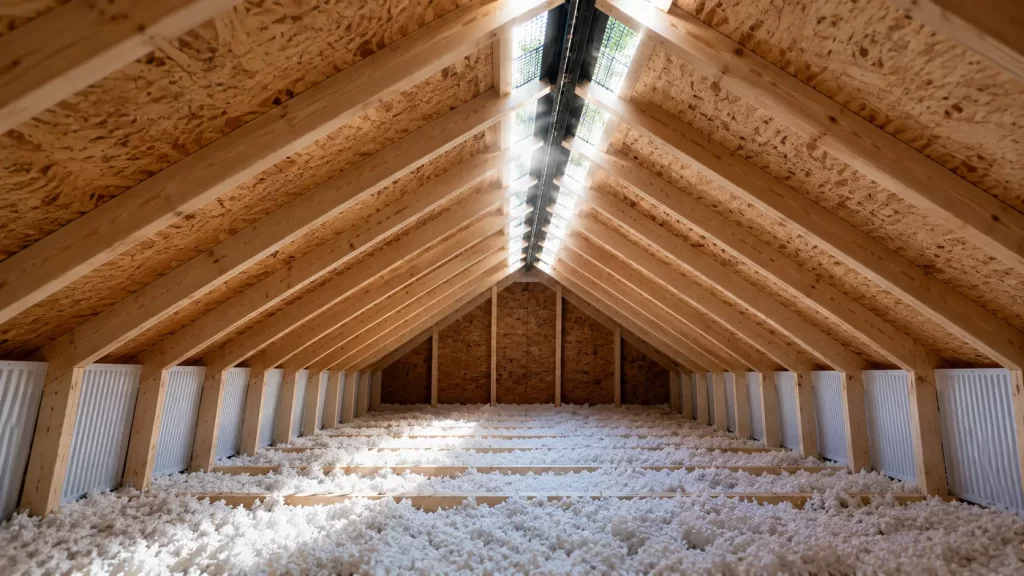
When homeowners think about roof health, they focus on shingles, flashing, and gutters—the visible components. But beneath those surfaces, an invisible system works quietly to extend your roof’s life, control energy costs, and prevent structural damage: ventilation. When that system fails, consequences ripple through your entire home. At Over The Top Roofing, we’ve seen it countless times across the North Shore—roofs failing prematurely, attics thick with moisture, energy bills climbing, all because airflow was never right.
Most ventilation problems go unnoticed until damage is severe. You don’t see blocked soffit vents or insufficient ridge vents from the ground. You don’t feel moisture building in your attic until mold appears or insulation sags. By then, what could’ve been a simple fix has become a costly repair—or worse, a full roof replacement years ahead of schedule. Understanding how ventilation works, what goes wrong, and how to fix it protects your home and your investment.
Summary:
- Why Roof Ventilation Matters More Than You Think
- Common Ventilation Problems in North Shore Homes
- Blocked or Insufficient Intake Vents
- Inadequate Ridge or Exhaust Vents
- Attic Insulation Blocking Airflow
- Signs Your Roof Ventilation Is Failing
- How Poor Ventilation Damages Your Roof and Home
- Fixing Ventilation Issues: What to Expect
- Frequently Asked Question
- Conclusion
Why Roof Ventilation Matters More Than You Think
Ventilation exists to balance airflow: cool, fresh air enters through intake vents (usually soffit vents along the eaves), flows upward through the attic space, and exits through exhaust vents (ridge vents, gable vents, or roof vents). This continuous cycle removes heat and moisture, keeping your attic close to outdoor temperature and dry year-round.
In summer, proper ventilation prevents attic temperatures from spiking to 150°F or higher—heat that radiates down into your living space, overworks your air conditioning, and literally cooks your shingles from below. In winter, it prevents warm indoor air from heating the attic unevenly, which melts snow on your roof and refreezes into ice dams at the eaves. Those ice dams block drainage, forcing water under shingles and into your home.
Beyond temperature control, ventilation manages moisture. Everyday activities—showers, cooking, laundry—send humid air upward. Without proper exhaust, that moisture condenses in your attic, saturating insulation, rotting wood decking, and creating perfect conditions for mold. Over time, structural damage spreads. What started as poor airflow becomes a health hazard and a financial disaster.
Massachusetts’ extreme seasonal swings make proper roof ventilation non-negotiable. Homes built before modern building codes often lack adequate ventilation. Even newer homes suffer if installation was rushed or shortcuts were taken. It’s a problem hiding in plain sight—until it isn’t.
Common Ventilation Problems in North Shore Homes
Ventilation failure takes many forms, often combining multiple issues that compound over time. Here are the most common problems we encounter across Salem, Peabody, Beverly, and the North Shore.
Blocked or Insufficient Intake Vents
Soffit vents along your roof’s eaves are intake points for cool air. If they’re blocked by insulation pushed too close to the roof edge, painted over during exterior work, clogged with debris, or simply too small for your attic’s square footage, airflow never starts. We regularly find attics with zero functional intake—just exhaust vents pulling against vacuum, achieving nothing. Code requires balanced intake and exhaust (typically a 1:1 ratio). When intake is compromised, the entire system fails.
Inadequate Ridge or Exhaust Vents
Even with perfect intake, insufficient exhaust traps hot, moist air in your attic. Many older homes have only small gable vents or a few static roof vents—nowhere near the capacity needed for modern insulation levels and climate demands. Ridge vents (installed along the roof peak) are the gold standard for exhaust, but they must be installed correctly: continuous along the entire ridge, with proper baffling to prevent weather infiltration, and paired with adequate intake below. Partial ridge vents or poorly cut openings render them ineffective.
Attic Insulation Blocking Airflow
Insulation is essential for energy efficiency—but only if it doesn’t block ventilation paths. Blown-in insulation often settles against soffit vents, sealing them shut. Batt insulation installed without baffles compresses against the roof deck, eliminating the air channel needed for circulation. Homeowners adding insulation to save energy accidentally sabotage ventilation, creating worse problems than they solve. Proper installation uses baffles to maintain clear airflow from soffit to ridge, even with deep insulation.
Signs Your Roof Ventilation Is Failing
Ventilation problems announce themselves—if you know what to look for. These symptoms indicate your attic isn’t breathing properly:
Excessive attic heat in summer. If your attic feels like an oven in July or August—significantly hotter than outdoor air—ventilation is failing. Properly vented attics stay closer to ambient temperature.
Ice dams in winter. Thick ice ridges along your roof’s edge after snowfall signal warm attic air melting snow unevenly. That warmth comes from poor ventilation trapping heat where it shouldn’t be.
Visible moisture, mold, or mildew. Dark stains on attic wood, damp insulation, musty smells, or visible mold growth all indicate trapped moisture. Ventilation should exhaust humidity before condensation occurs.
Peeling exterior paint or rust on metal components. Moisture escaping through soffits or roof vents can cause paint to blister and metal flashing to corrode prematurely.
Premature shingle aging. Shingles curling, cracking, or losing granules faster than expected—especially on south-facing slopes—often result from excessive attic heat accelerating wear from below.
Higher energy bills. An overheated attic in summer forces your AC to work harder. Moisture-saturated insulation loses R-value, making your home less efficient year-round.
If you recognize multiple symptoms, your roof ventilation systems likely need professional evaluation and correction.
How Poor Ventilation Damages Your Roof and Home
Ventilation problems don’t stay isolated. They cascade into structural damage, health risks, and financial loss:
Shortened roof lifespan. Excessive heat degrades asphalt shingles, causing brittleness, curling, and granule loss. Trapped moisture rots roof decking and underlayment. A roof designed to last 25 years may fail in 15-18 without proper ventilation.
Mold and health hazards. Persistent attic moisture creates mold colonies that spread into living spaces through air leaks, triggering allergies, respiratory issues, and structural contamination requiring expensive remediation.
Ice dam damage. Water backing up behind ice dams infiltrates under shingles, soaking insulation, staining ceilings, and damaging walls. Severe cases require interior repairs far exceeding the cost of fixing ventilation.
Increased energy costs. Poor ventilation makes your HVAC system work harder, raising bills year-round. Studies show properly vented attics reduce cooling costs by 10-15% in summer.
Structural rot. Moisture-saturated roof decking weakens, sags, and eventually fails, requiring full deck replacement during roof work—adding thousands to project costs.
We’ve seen homes where poor attic ventilation caused $15,000+ in combined roof, insulation, and interior repairs—all preventable with a $2,000 ventilation upgrade years earlier. It’s not a matter of if poor ventilation causes damage. It’s when.
Fixing Ventilation Issues: What to Expect
Correcting ventilation starts with a professional assessment. At Over The Top Roofing, we measure your attic’s square footage, calculate required ventilation per building code (typically 1 square foot of vent per 150 square feet of attic), and inspect existing intake and exhaust vents for blockages, damage, or inadequate capacity.
Solutions vary by problem:
Adding or clearing soffit vents. If intake is blocked, we clear obstructions, install baffles to keep insulation away from vents, or add new soffit vents where none exist.
Installing ridge vents. Ridge vents provide continuous exhaust along the roof peak, the most effective solution for balanced airflow. Installation involves cutting a narrow opening along the ridge, installing the vent, and covering it with ridge cap shingles. It integrates seamlessly with your roof.
Upgrading gable or static vents. Older homes with only gable vents may benefit from additional roof vents or a transition to ridge vents for superior performance.
Adding baffles and rebalancing insulation. Proper baffles maintain clear air channels between insulation and roof decking, ensuring intake air reaches the ridge even with deep insulation.
Most ventilation upgrades complete in 1-2 days, with minimal disruption. Cost ranges from $500 for minor corrections to $2,500+ for comprehensive retrofits, depending on complexity. Compare that to a premature roof replacement costing $10,000-$18,000—ventilation is an investment, not an expense.
We back all ventilation work with our industry-leading warranty, and we tie it into your roof’s overall health strategy. You’re not just fixing airflow. You’re extending your roof’s life, protecting your home’s structure, and reclaiming energy efficiency.
Frequently Asked Questions
How do I know if my roof has ventilation problems?
Warning signs include excessive attic heat in summer, ice dams in winter, visible mold or moisture in the attic, peeling paint on soffits, and premature shingle aging. If your attic feels significantly hotter than outdoor temperature or stays damp after rain, ventilation is likely insufficient.
Can poor ventilation shorten my roof's lifespan?
Yes. Inadequate airflow traps heat and moisture, accelerating shingle deterioration, rotting roof decking, and degrading underlayment. Roofs with proper ventilation last 15-25% longer than poorly ventilated roofs in the same climate, saving thousands in premature replacement costs.
What causes roof ventilation to fail?
Common causes include blocked soffit vents (insulation, debris), insufficient exhaust vents (too few ridge vents or no gable vents), attic insulation pushed against roof decking, and improper installation during roof replacement. Many older Massachusetts homes were built before modern ventilation standards.
Is fixing ventilation expensive?
Cost varies. Adding soffit vents or a ridge vent during routine maintenance is affordable ($500-$2,000). Retrofitting ventilation into an older home with limited access may cost more. However, ventilation upgrades prevent far costlier damage—rot, mold remediation, premature roof replacement—making them a high-value investment.
Can I improve ventilation without replacing my roof?
Often, yes. Soffit vents, gable vents, or powered attic fans can be added without full roof replacement. Ridge vents require cutting the roof peak but don’t necessitate replacing shingles unless they’re already worn. A professional assessment determines the most cost-effective approach for your home.
Does Massachusetts climate make ventilation more important?
Absolutely. Massachusetts experiences extreme seasonal swings—hot, humid summers and cold, snowy winters. Poor ventilation causes heat buildup in summer (raising cooling costs) and ice dams in winter (from warm attic air melting snow unevenly). Proper airflow mitigates both extremes, protecting your roof year-round.
Conclusion
Don’t let hidden ventilation problems shorten your roof’s life. Contact Over The Top Roofing for a professional ventilation assessment and solutions backed by 25+ years of North Shore expertise. Serving Salem, Peabody, Beverly, and beyond. Call (978) 854-3418 or visit us online to schedule your inspection today.
