
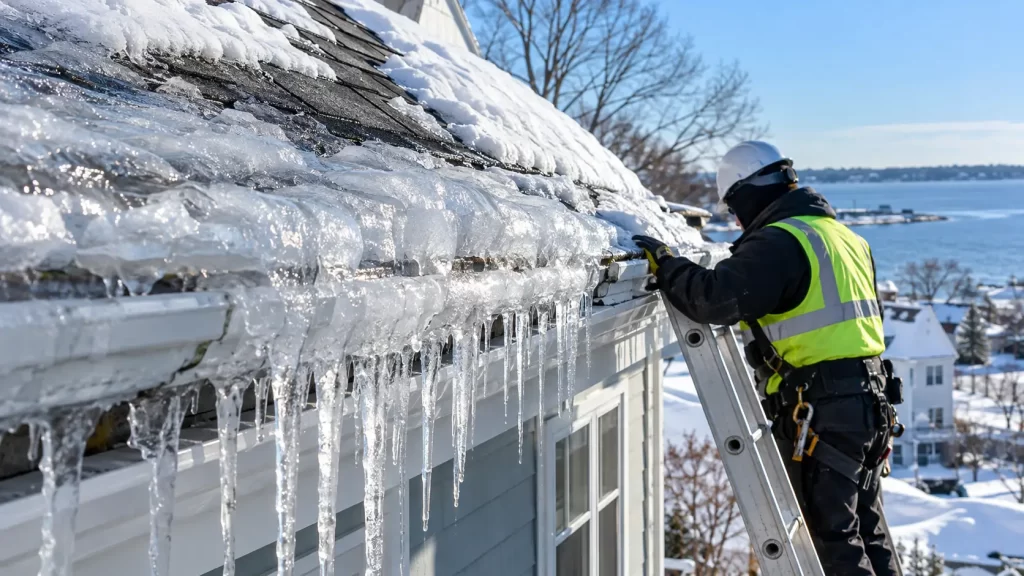
Ice dams are one of the most destructive winter threats facing Peabody homeowners, yet many don’t understand the danger until water is pouring through their ceilings in January. These thick ridges of ice that form along roof edges might look harmless, but they trap melting snow on your roof, forcing water beneath shingles and into your home’s interior. The result: extensive damage to roofing materials, insulation, ceilings, walls, and even structural components. At Over The Top Roofing, we’ve spent 25+ years protecting Peabody homes from ice dam damage, and we know that prevention—implemented before winter arrives—is always more effective and less expensive than emergency repairs.
New England’s winter climate creates perfect conditions for ice dams. Peabody experiences repeated freeze-thaw cycles, significant snowfall, and the extreme temperature differentials between heated homes and frigid outdoor air that ice dams require to form. When warm air from your living spaces leaks into your attic, it heats the roof surface above, melting the bottom layer of snow. That meltwater runs down to the colder roof edges and refreezes, building up layer by layer into a dam that blocks proper drainage.
The damage ice dams cause goes far beyond the roof. Water backed up behind ice dams seeps under shingles, saturates underlayment and decking, drips into attic insulation, and eventually leaks into living spaces. By the time you see water stains on your ceiling, the damage has been accumulating for days or weeks. Mold grows in damp insulation and wood. Structural members rot. Gutters tear away from fascia boards under the weight of ice. What starts as a seemingly minor winter issue becomes a multi-thousand-dollar disaster requiring emergency repairs, mold remediation, and interior restoration.
This comprehensive guide will help Peabody homeowners understand ice dam formation, recognize vulnerability factors, implement proven prevention strategies, and know when to call Over The Top Roofing for professional assessment and protection. With proper preparation this fall, you can face winter confidently, knowing your home is protected from one of New England’s most costly seasonal threats.
Summary:
- What Are Ice Dams and Why Are They Dangerous?
- Why Peabody Homes Are Particularly Vulnerable to Ice Dams
- How Ice Dams Form: Understanding the Process
- The Hidden Damage Ice Dams Cause to Your Roof and Home
- Shingle and Flashing Damage
- Water Infiltration and Interior Leaks
- Gutter and Fascia Destruction
- Insulation and Structural Damage
- Proven Strategies to Prevent Ice Dams in Peabody
- Proper Attic Insulation and Air Sealing
- Adequate Roof Ventilation
- Gutter Maintenance and Ice Dam Heat Cables
- Professional Roof Assessments Before Winter
- What to Do If Ice Dams Form on Your Peabody Roof
- How Over The Top Roofing Protects Peabody Homes from Ice Dams
- FAQ: Ice Dam Prevention and Protection in Peabody, MA
What Are Ice Dams and Why Are They Dangerous?
Ice dams are ridges of solid ice that form along the edges of roofs, typically at eaves and in gutters. They develop when melting snow refreezes, creating a barrier that prevents proper water drainage. As more snow melts, water accumulates behind the dam with nowhere to go. Eventually, that trapped water finds paths beneath shingles, through tiny gaps in flashing, and into the underlying roof structure.
The danger lies in what happens once water penetrates your roof’s protective layers. Roofing materials are designed to shed water that flows downward and off the roof, not to withstand water that sits stationary or flows upward—which is exactly what happens behind an ice dam. Water infiltrates shingle overlaps, saturates felt underlayment, and soaks into plywood or OSB roof decking. Wood swells and begins to rot. Insulation becomes waterlogged and loses its insulating value. Water follows rafters and pipes into walls and ceilings, causing staining, drywall damage, and mold growth.
Ice dams also destroy gutters and exterior components. The weight of accumulated ice—often hundreds of pounds along a single roof edge—pulls gutters away from fascia boards, bending or breaking hangers and causing permanent damage. Ice pushing against shingles can lift and crack them. Repeated freeze-thaw cycles worsen damage each time the dam grows and shrinks. Even after the ice melts, the damage remains, requiring expensive repairs that could have been prevented with proper attic insulation and ventilation.
Homeowners sometimes dismiss ice dams as a normal winter occurrence, but they are actually a clear sign of energy inefficiency and inadequate home weatherization. A properly insulated and ventilated home maintains a cold roof surface that doesn’t melt snow. When ice dams form, your home is literally telling you that it’s losing heat through the roof—costing you money in energy bills while setting the stage for structural damage. Addressing the root causes protects both your home and your budget.
Why Peabody Homes Are Particularly Vulnerable to Ice Dams
Peabody’s winter climate combines all the factors that promote ice dam formation. The town experiences significant snowfall, frequent freeze-thaw cycles, and sustained cold periods punctuated by warmer days that accelerate melting. Unlike consistently frigid climates where snow simply accumulates without melting, Peabody’s temperature fluctuations create the repeated melt-freeze pattern that builds substantial ice dams rapidly.
Many Peabody homes were built decades ago when insulation standards were far less stringent than today. Older homes often have inadequate attic insulation, minimal air sealing, and insufficient ventilation—the perfect recipe for ice dam formation. Even newer homes can be vulnerable if insulation was installed improperly, ventilation pathways are blocked, or air sealing around attic penetrations (lights, fans, chimneys) was neglected during construction.
Architectural features common in Peabody’s housing stock increase ice dam risk. Complex roof designs with multiple valleys, dormers, and varying pitches create areas where snow accumulates and drainage is less efficient. Ranch-style homes with low-pitched roofs are especially vulnerable because snow sits longer and melting water travels farther before reaching edges. Two-story colonials often have insufficient attic ventilation in spaces with limited airflow paths. Each architectural style presents unique challenges that require tailored prevention strategies.
Peabody homeowners also face the challenge of winter roof access. Once snow covers roofs, identifying and addressing ice dam formation becomes difficult and dangerous. That’s why fall preparation—through pre-winter roof inspection in Peabody and preventive improvements—is so critical. By the time ice dams appear, options are limited to reactive measures rather than proactive prevention. Over The Top Roofing’s fall assessments identify vulnerability factors while there’s still time to implement solutions before the first significant snowfall.
How Ice Dams Form: Understanding the Process
Understanding ice dam formation helps homeowners recognize why prevention focuses on attic conditions rather than just roof maintenance. The process begins inside your home. During winter, heated air from living spaces rises and, if your attic floor isn’t properly insulated and air-sealed, that warm air enters the attic. The warm air heats the underside of your roof decking, raising the temperature of the roof surface above.
When snow covers your roof, the warmed roof surface melts the bottom layer of snow, even when outdoor temperatures are well below freezing. Gravity pulls the meltwater down the roof toward the eaves. However, the roof edges (eaves and overhangs) extend beyond the heated envelope of your home. These areas remain cold because there’s no warm attic space beneath them. When meltwater reaches these cold edges, it refreezes immediately.
With each freeze-thaw cycle, the ice ridge grows. More melting snow adds water to the growing dam. The ice can extend several inches or even feet up the roof, and the weight can reach hundreds of pounds per linear foot. Behind the dam, water pools with nowhere to drain. Shingles aren’t designed to resist standing water. Eventually, water finds its way beneath shingles through capillary action, overlapping seams, or tiny gaps. Once beneath the shingles, water saturates underlayment and decking, then drips into insulation and eventually into your home’s interior.
The key insight is that ice dams are a symptom of heat loss, not primarily a roofing problem. While roof condition matters—damaged shingles or flashing make water infiltration easier—the root cause is thermal imbalance. A roof surface should be uniformly cold in winter, preventing differential melting. When parts of your roof are warm enough to melt snow while edges remain frozen, ice dams form. That’s why effective prevention targets insulation, air sealing, and ventilation rather than just roof surface treatments.
The Hidden Damage Ice Dams Cause to Your Roof and Home
The destruction ice dams inflict often remains hidden until extensive damage has occurred. By the time visible interior leaks appear, water has typically been infiltrating your roof system for days or weeks, causing cumulative damage that grows exponentially the longer it continues. Understanding the full scope of ice dam damage underscores why prevention is so much more cost-effective than dealing with consequences.
Shingle and Flashing Damage
Ice dams directly damage shingles and flashing. The weight and expansion of ice can lift shingle edges, breaking the adhesive seal and allowing wind to catch and tear shingles off. Ice forced beneath shingles pries them upward, cracking brittle cold shingles and tearing them from fasteners. Once shingles are lifted or damaged, the roof’s waterproof barrier is compromised even after the ice melts.
Flashing around chimneys, vents, and roof valleys suffers similar damage. Ice pushing against flashing can bend or separate it from roofing materials, creating gaps that persist after ice melts. Water that infiltrates behind damaged flashing causes rot in underlying wood and leaks that may appear far from the damaged area as water travels along rafters and structural members. Repairing flashing damage requires removing and reinstalling shingles, adding significant cost to ice dam-related repairs.
Repeated ice dam formation accelerates aging of roofing materials. Shingles subjected to lifting and stress from ice lose granules, crack prematurely, and fail years before their expected lifespan. Even high-quality roofing materials can’t withstand the mechanical stress and moisture exposure that ice dams create. Prevention protects your investment in your roof, ensuring it delivers its full intended lifespan rather than requiring premature replacement.
Water Infiltration and Interior Leaks
Once water penetrates beneath shingles, it saturates felt underlayment—a secondary moisture barrier that’s not designed to withstand prolonged water exposure. Soaked underlayment loses its protective function and begins to deteriorate. Water then reaches plywood or OSB roof decking, causing wood to swell, warp, and eventually rot. Structural integrity weakens, and if damage is extensive, sections of decking may require replacement during repairs.
Water doesn’t stop at the decking. It drips into attic insulation, which acts like a sponge. Wet insulation loses virtually all insulating value and becomes a breeding ground for mold and mildew. Fiberglass insulation compresses when wet and never fully recovers, requiring replacement. Cellulose insulation can support mold growth and may need complete removal. The cost of insulation replacement often exceeds the cost of roof repairs themselves.
Eventually, water reaches living spaces. Ceiling stains appear, drywall becomes saturated and crumbles, and paint peels. In severe cases, water runs down interior walls, damaging flooring, furniture, and personal belongings. Electrical fixtures in ceilings pose shock hazards when wet. Mold growth in walls and ceilings creates health risks and requires professional remediation. What started as an ice dam outside has become an interior disaster requiring contractors from multiple trades to restore your home.
Gutter and Fascia Destruction
Gutters and fascia boards bear the brunt of ice dam weight. Ice filling gutters and extending over roof edges can weigh hundreds of pounds, far exceeding the load gutters are designed to carry. Gutter hangers bend or pull out of fascia boards. Gutters separate from the house, sag dramatically, or tear completely free, often taking sections of fascia board with them.
Fascia boards—the vertical boards behind gutters—rot when exposed to constant moisture from ice dams. Wet, rotting fascia loses its ability to support gutter systems and must be replaced before new gutters can be installed. Soffit panels beneath roof overhangs also suffer water damage, requiring removal and replacement. These exterior carpentry repairs add substantially to the total cost of ice dam damage restoration.
Downspouts packed with ice can split or separate at joints. When spring thaw arrives, damaged gutters and downspouts no longer direct water away from your foundation, creating new problems with basement flooding and foundation settling. The cascading effects of ice dam damage extend far beyond the immediate roof area, affecting your home’s entire water management system and structural integrity.
Insulation and Structural Damage
The long-term structural consequences of repeated ice dam damage are often underestimated. Water infiltration causes wood rot in rafters, joists, and roof decking. Rotted structural members lose load-bearing capacity, potentially leading to sagging rooflines or even catastrophic failure under heavy snow loads. Structural repairs require far more than surface fixes—damaged framing must be exposed, removed, and replaced by skilled carpenters, a costly and invasive process.
Mold growth in attic spaces and wall cavities poses serious health risks. Mold spores circulate through your home’s air, aggravating allergies and respiratory conditions. Professional mold remediation—required to safely remove contaminated materials and treat affected areas—can cost thousands of dollars. Insurance coverage for mold damage is often limited or excluded, leaving homeowners responsible for the full cost.
The cumulative financial impact of ice dam damage typically ranges from $5,000 to $20,000 or more, depending on severity and how long water infiltration continued before being addressed. Compare that to the cost of preventive measures—insulation improvements, ventilation upgrades, and professional assessments—which typically run $1,500 to $5,000. The return on investment for prevention is dramatic, and the peace of mind knowing your home is protected is priceless.
Proven Strategies to Prevent Ice Dams in Peabody
Effective ice dam prevention requires a multi-faceted approach that addresses heat loss, ventilation, and drainage. No single measure provides complete protection; the most successful strategies combine improvements to create a comprehensive defense. Over The Top Roofing’s 25+ years of experience protecting Peabody homes has proven which approaches work and which are merely temporary fixes.
Wind events are more severe near the coast. Nor’easters, tropical systems, and winter storms bring sustained high winds and powerful gusts that test every fastener, shingle seal, and flashing joint. Older roofs or those with previous repairs may have weak points that coastal winds exploit. Beverly homeowners should inspect roofs after every significant wind event, looking for lifted shingles, displaced flashing, or debris damage.
Humidity and moisture exposure are elevated near the ocean. Higher moisture levels accelerate mold growth, wood rot, and material deterioration. Roofs in Beverly must contend with salt-laden fog, driving rain, and freeze-thaw cycles that intensify moisture-related damage. Proper ventilation and prompt leak repairs are even more critical in coastal environments where moisture problems escalate quickly.
Unique architectural features in Beverly’s historic neighborhoods—steep pitches, slate or tile materials, decorative trim, and complex roof lines—require specialized expertise for damage assessment and repair. Over The Top Roofing’s 25+ years of experience includes extensive work on Beverly’s diverse housing stock, from historic colonials to modern coastal homes. We understand the specific challenges coastal roofs face and design repairs and replacements that deliver decades of reliable protection.
Proper Attic Insulation and Air Sealing
The foundation of ice dam prevention is reducing heat loss from living spaces into the attic. Building codes now require significantly more insulation than in decades past, and many Peabody homes built before modern standards have inadequate attic insulation. Adding insulation to achieve R-49 or higher (the current Massachusetts recommendation) dramatically reduces heat transfer through the attic floor, keeping the roof surface cold and preventing snow melt.
Equally important is air sealing. Even thick insulation can’t prevent warm air from rising through gaps and penetrations. Air sealing focuses on closing pathways around recessed lights, bathroom fans, plumbing stacks, chimneys, and attic hatches. These penetrations create thermal chimneys that funnel warm air directly into attic spaces. Professional air sealing using expanding foam, caulk, and specialized barriers stops heat loss at its source.
The combination of proper insulation and comprehensive air sealing keeps attic temperatures close to outdoor temperatures, even when your home is heated to 70°F. A cold attic means a cold roof surface, which means snow doesn’t melt differentially and ice dams can’t form. This approach also reduces heating costs substantially, often paying for itself through energy savings within a few years while protecting your home from ice dam damage.
Adequate Roof Ventilation
Proper attic ventilation works in tandem with insulation to maintain uniform roof temperatures. Ventilation allows cold outdoor air to circulate through the attic, removing any residual heat that escapes through insulation and preventing warm pockets that melt snow. Balanced ventilation systems include intake vents at soffits (under roof eaves) and exhaust vents at or near the roof peak, creating natural airflow as warm air rises and exits while cool air enters below.
Many Peabody homes have insufficient or blocked ventilation. Insulation pushed too far into eaves blocks soffit vents. Inadequate ridge or gable vents limit exhaust capacity. Some homes lack proper ventilation entirely. Professional assessment identifies ventilation deficiencies and recommends improvements—additional soffit vents, ridge vent installation, or gable vent upgrades—to achieve the 1:300 ventilation ratio recommended by building codes (1 square foot of ventilation per 300 square feet of attic space).
Proper ventilation also prevents moisture accumulation in attics, reducing the risk of mold, wood rot, and shingle deterioration from the inside. It extends roofing material lifespan and improves summer cooling efficiency by venting superheated attic air. Ventilation improvements are a core component of year-round roof maintenance in Peabody, delivering benefits that extend far beyond ice dam prevention.
Gutter Maintenance and Ice Dam Heat Cables
While insulation and ventilation address root causes, gutter maintenance and heat cables provide supplemental protection. Clean gutters allow meltwater to drain freely before refreezing. Clogged gutters trap water, accelerating ice dam formation. Fall gutter cleaning is essential preparation, removing leaves and debris that block drainage. Gutter guards can reduce maintenance needs, though they must be properly installed to prevent ice buildup on the guards themselves.
Heat cables (also called heat tape) are electric cables installed in a zigzag pattern along roof edges and through gutters. When activated, they melt channels through ice, allowing water to drain even when dams form. Heat cables are a supplemental measure, not a substitute for proper insulation and ventilation, but they provide valuable protection for homes with vulnerable roof designs or in situations where structural improvements aren’t immediately feasible.
Heat cables must be installed correctly to be effective and safe. Improper installation creates fire hazards or ineffective melt patterns. Professional installation ensures cables are positioned optimally, secured properly, and connected to GFCI-protected circuits. Over The Top Roofing can assess whether heat cables would benefit your specific roof configuration and install them as part of a comprehensive ice dam prevention strategy.
Professional Roof Assessments Before Winter
Every home is unique, and effective ice dam prevention requires understanding your specific vulnerability factors. Professional assessments identify problem areas—insufficient insulation zones, ventilation blockages, architectural features that trap snow, and roof conditions that increase ice dam risk. Over The Top Roofing’s fall assessments include attic inspections, thermal imaging (when appropriate) to identify heat loss patterns, ventilation evaluations, and roof condition analysis.
Based on assessment findings, we provide prioritized recommendations tailored to your home and budget. Some improvements deliver immediate impact at modest cost—air sealing around attic penetrations, adding insulation in specific zones, or installing heat cables in vulnerable areas. Other improvements may be more extensive but provide comprehensive long-term protection. We help you understand options, costs, and expected benefits so you can make informed decisions.
Fall is the ideal time for assessments because it allows scheduling improvements before winter weather makes work difficult or impossible. Insulation and air sealing contractors are less busy in fall than during peak seasons. Roof work can proceed in moderate temperatures without snow or ice complications. Acting in October or early November ensures your home is fully prepared before Peabody’s first significant snowfall. For more information on comprehensive ice dam protection strategies, contact Over The Top Roofing at (978) 854-3418 to schedule your fall assessment today.
What to Do If Ice Dams Form on Your Peabody Roof
Despite best efforts, ice dams sometimes form—especially on older homes or during particularly severe winters. If you notice ice dams developing, act quickly to minimize damage. Never attempt to remove ice dams yourself using hammers, chisels, or sharp tools. You’ll damage shingles and flashing, create leaks where none existed, and risk serious injury from falling or from slipping on icy roofs. The cost of DIY damage often exceeds the cost of professional removal.
Safely removing snow from your roof (using a roof rake from the ground) can help prevent additional dam growth, but be cautious—pulling too hard can damage shingles, and snow falling from roofs can cause injury. Focus on removing snow from the lower three to four feet of roof edge, where dams typically form. If ice dams have already developed substantially, professional removal is the safest and most effective option.
Contact Over The Top Roofing immediately if ice dams are causing visible leaks inside your home. We provide emergency winter roof repair services and can safely remove ice dams using low-pressure steam equipment that melts ice without damaging roofing materials. We also assess any damage that has occurred and provide temporary or permanent repairs to prevent continued water infiltration.
If leaks are active, minimize interior damage by containing water with buckets and tarps. Move furniture and valuables away from leak areas. In severe cases, piercing the ceiling to allow trapped water to drain (into a bucket) prevents greater damage from ceiling collapse—but consult with professionals before attempting this. Document all damage with photos for insurance claims. Once the immediate crisis is addressed, Over The Top Roofing will help you implement long-term prevention measures to ensure ice dams don’t recur in. future winters.
How Over The Top Roofing Protects Peabody Homes from Ice Dams
For 25+ years, Over The Top Roofing has been Peabody’s trusted partner for ice dam prevention and winter roof protection. Our founder, Elias Junior, brings decades of hands-on roofing expertise and deep knowledge of New England’s climate challenges to every project. We understand the unique factors that make Peabody homes vulnerable to ice dams, and we design customized prevention strategies that deliver lasting protection.
Our comprehensive approach begins with thorough fall assessments. We inspect your roof condition, evaluate attic insulation and ventilation, identify air leakage pathways, and assess architectural features that influence ice dam risk. We use this information to create a prioritized action plan with transparent pricing, helping you understand which improvements deliver the greatest protection and value for your investment.
We perform all work to the highest standards, backed by industry-leading warranties that reflect our confidence in our craftsmanship. Whether installing additional insulation, upgrading ventilation systems, repairing roof damage, or implementing heat cable systems, every project receives the same meticulous attention to detail and commitment to quality that has built our reputation across the North Shore. We’re fully licensed and insured, giving you peace of mind that your home and investment are protected.
Our relationship with clients doesn’t end when projects are completed. We provide guidance on winter monitoring, answer questions throughout the season, and stand ready to respond if issues arise. Our emergency repair services ensure you’re never facing ice dam damage alone. When you choose Over The Top Roofing, you’re partnering with a local company that treats your home like our own and backs that commitment with decades of proven expertise.
Don’t wait for ice dams to form before taking action. Contact Over The Top Roofing today at (978) 854-3418 to schedule your fall ice dam vulnerability assessment. We’ll identify your risk factors, recommend cost-effective solutions, and ensure your Peabody home is fully protected before winter’s first snowfall. Protect your home, protect your family, and gain the confidence that comes from knowing your roof is ready for whatever New England winter brings.
FAQ: Ice Dam Prevention and Protection in Peabody, MA
What causes ice dams on Peabody roofs?
Ice dams form when heat escaping from your attic melts snow on your roof. The water runs down to the colder eaves and refreezes, creating a dam. Inadequate attic insulation, poor ventilation, and heat loss are the primary causes. Peabody’s freeze-thaw winter cycles make homes especially vulnerable.
How can I tell if my home is at risk for ice dams?
Warning signs include icicles forming along roof edges, uneven snow melt patterns on your roof, ice buildup in gutters, and past history of ice dams or winter leaks. Homes with insufficient attic insulation, poor ventilation, or complex roof designs face higher risk. Over The Top Roofing can assess your home’s vulnerability.
Can ice dams damage my roof permanently?
Yes. Ice dams force water beneath shingles, damaging underlayment, decking, and interior structures. Repeated freeze-thaw cycles worsen damage each winter. Water infiltration leads to rot, mold, and insulation destruction. Gutters can be torn from fascia boards. Preventing ice dams protects your roof’s long-term integrity.
What's the best way to prevent ice dams in Peabody?
The most effective prevention combines proper attic insulation (to reduce heat loss), adequate ventilation (to keep roof surfaces cold), and air sealing (to prevent warm air from entering the attic). Professional assessments identify vulnerabilities, and targeted improvements dramatically reduce ice dam risk.
Should I remove ice dams myself?
No. DIY ice dam removal is dangerous and often causes more damage. Chipping ice can break shingles and flashing. Climbing on icy roofs risks serious injury. Contact Over The Top Roofing at (978) 854-3418 for safe, professional ice dam removal and emergency repairs if dams have already formed.
When should I prepare my Peabody home for ice dam prevention?
Fall is the ideal time—before snow arrives. Schedule a roof and attic assessment in October or early November. Insulation improvements, ventilation upgrades, and gutter maintenance should be completed before the first significant snowfall. Proactive preparation prevents ice dam formation rather than reacting to damage after it occurs.
