
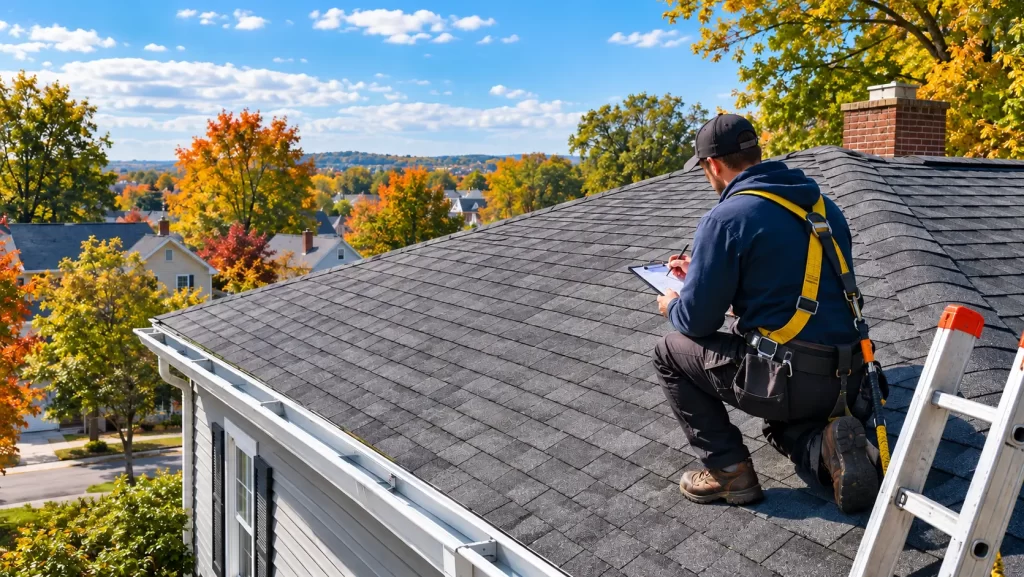
As September arrives in Peabody, Massachusetts, homeowners face a critical window to protect their homes before the challenging fall and winter seasons. While summer’s heat fades and autumn colors begin appearing, your roof requires strategic attention to withstand the coming months of nor’easters, heavy snow, ice dams, and temperature extremes that define New England winters.
With 25+ years protecting Peabody homes through countless Massachusetts winters, Over The Top Roofing understands exactly what roof preparation makes the difference between a secure winter and costly emergency repairs at 2 AM during a blizzard. September represents the ideal preparation month—mild weather allows safe, thorough work while giving you sufficient time to address discovered issues before harsh conditions arrive.
This comprehensive September checklist provides Peabody homeowners with the specific actions needed to prepare your roof for fall and winter. Whether you’re conducting preliminary checks yourself or planning professional service, understanding what to address now prevents thousands in emergency repairs and interior damage when temperatures plummet.
Summary:
- Why September Is the Critical Month for Roof Preparation in Peabody
- Complete September Roof Preparation Checklist
- Inspect and Repair Shingles Before Temperature Drops
- Clean and Secure Gutters for Fall Leaves
- Check Flashing and Seals Around Roof Penetrations
- Assess Attic Insulation and Ventilation
- Trim Overhanging Trees and Remove Debris
- Common Roof Vulnerabilities That Worsen in Peabody’s Fall and Winter
- Professional vs. DIY: What You Can Check and When to Call Experts
- How Proper September Preparation Prevents Costly Winter Emergencies
- Frequently Asked Questions
Why September Is the Critical Month for Roof Preparation in Peabody
September occupies a unique position in Massachusetts’ roofing calendar—the last month offering consistently favorable conditions for thorough roof work before fall’s unpredictability and winter’s severity arrive. This timing matters significantly for Peabody homeowners preparing for the challenging months ahead.
Weather stability represents September’s primary advantage. Unlike October’s temperature swings and increasing precipitation, September typically offers mild days (65-75°F), low humidity, and extended dry periods ideal for roofing inspections, repairs, and material application. Sealants, adhesives, and roofing cements require specific temperature ranges (typically 50°F+) and 24-48 hours of dry conditions to cure properly—conditions increasingly unreliable after mid-October.
Contractor availability peaks in September before the fall rush intensifies. By October, every homeowner suddenly realizes winter approaches, creating 4-6 week backlogs for quality contractors. September scheduling typically means 1-2 week response times versus October’s month-plus waits. For time-sensitive repairs, this difference proves critical.
Comprehensive problem resolution becomes possible with September’s timing. Minor issues discovered in September allow proper permanent repairs, while the same discoveries in late October often require temporary measures pending spring—temporary fixes that frequently fail during winter, causing the very emergencies they were meant to prevent.
Peabody’s geographic location intensifies seasonal challenges. Located 15 miles from the coast, Peabody experiences coastal storm intensity without full maritime temperature moderation. Nor’easters bring heavy precipitation, high winds, and rapid temperature drops. Winter brings substantial snow loads (50-70 inches annually), ice dam conditions, and freeze-thaw cycles stressing every roof vulnerability. These specific challenges make September preparation essential, not optional.
Historical weather data shows Peabody’s first significant fall storm typically occurs late September to early October—the precise window when unprepared roofs begin failing. Homeowners who complete preparation before this storm avoid the emergency repair rush and premium pricing that follows major weather events.
The financial implications are clear: $300-$800 spent on September preventive maintenance typically prevents $3,000-$8,000 in winter emergency repairs and interior water damage. Insurance claims data consistently shows preventable winter roof failures peak in January-February among homes that skipped fall preparation.
Complete September Roof Preparation Checklist
Effective fall and winter preparation requires systematic attention to specific roof components and potential failure points. This checklist prioritizes actions by impact and urgency, helping Peabody homeowners focus on what matters most.
Inspect and Repair Shingles Before Temperature Drops
Shingle condition directly determines your roof’s ability to shed water and resist wind—both critical for surviving Peabody’s fall storms and winter precipitation. September’s moderate temperatures provide the last reliable window for shingle repairs before cold weather compromises installation quality.
Begin with a ground-level inspection using binoculars. Examine shingles for curling edges (indicating aging and moisture susceptibility), missing granules (visible as darker patches reducing UV and water resistance), cracked or broken shingles, loose sections, and any missing pieces. Pay particular attention to south and west-facing slopes, which receive maximum sun exposure and show deterioration first.
Look for wind damage patterns common after summer thunderstorms—lifted edges, diagonal tear lines, and clusters of disturbed shingles indicating previous wind events. Even minor wind damage allows water infiltration during fall’s driving rains and creates uplift points where winter winds can strip larger sections.
Check valleys (where two roof planes meet) especially carefully. Valley shingles handle concentrated water flow and experience accelerated wear. Damage here leads directly to leaks during heavy precipitation—precisely what nor’easters deliver. Replace any compromised valley shingles immediately.
Professional inspection reveals hidden issues invisible from the ground: subtle delamination, fastener backing out, micro-cracks developing in older shingles, and pattern wear indicating ventilation or insulation problems. Our comprehensive roof inspection service examines your entire roof system, identifying vulnerabilities before they become winter emergencies.
Timing considerations: Shingle repairs require temperatures above 45-50°F and 24-48 hours without precipitation for proper adhesive curing. September reliably provides these conditions; November rarely does. Address all shingle issues during September to ensure repairs perform properly when tested by winter weather.
If your Peabody roof is 18-22 years old (approaching typical asphalt shingle lifespan in Massachusetts), September is the ideal time to assess whether spot repairs suffice or complete replacement makes more sense. Replacing a failing roof before winter eliminates emergency situations and provides better contractor selection, pricing, and installation quality than rushed spring replacements after winter damage.
pricing, and installation quality than rushed spring replacements after winter damage.
Clean and Secure Gutters for Fall Leaves
Gutter function becomes critical in fall and winter, yet most Peabody homes enter these seasons with compromised gutter systems. Clean, properly functioning gutters prevent ice dams, protect fascia and soffits from rot, manage roof drainage, and prevent basement flooding—all essential for winter protection.
September gutter preparation begins with complete debris removal. While full autumn leaf fall hasn’t occurred, summer growth—pine needles, seed pods, small twigs, and accumulated organic matter—clogs gutters and downspouts. Remove all debris manually or with professional cleaning, ensuring water flows freely. Test flow by running garden hoses in gutters and confirming rapid drainage through downspouts.
Inspect gutter integrity thoroughly: Look for rust spots or holes (particularly at seams and corners), sagging sections indicating fastener failure or water weight damage, loose or detached segments, improperly pitched sections where water pools, and damaged or insufficient downspouts. Each issue compromises winter performance and requires correction before weather deteriorates.
Check downspout discharge points—water must exit at least 4-6 feet from your foundation. Insufficient discharge causes foundation problems, basement flooding, and ice formation near structures during winter. Install downspout extensions if needed ($20-$50 per downspout) to ensure proper drainage away from your home.
Consider gutter guard installation during September preparation. Quality guards ($8-$12 per linear foot installed) reduce maintenance requirements, prevent ice dam-causing clogs, and extend gutter life significantly. They’re particularly valuable for Peabody homes with nearby trees or difficult roof access. Our gutter cleaning and maintenance services include guard installation as part of comprehensive fall preparation.
Why this matters for winter: Clogged gutters during winter create ice dams—frozen barriers preventing snowmelt drainage. Water backs up under shingles, infiltrates your home, and causes $2,000-$8,000+ in damage. This entirely preventable problem results from inadequate fall gutter preparation more than any other single factor.
Clean gutters before October leaf fall, then schedule a final cleaning in late October or early November after most leaves have dropped. This two-stage approach ensures gutters remain clear entering winter while avoiding premature cleaning that leaves gutters vulnerable to fall accumulation.
Check Flashing and Seals Around Roof Penetrations
Flashing—metal strips sealing transitions between roof planes and penetrations—represents your roof’s most vulnerable component. These critical seals experience extreme temperature swings, expansion-contraction cycles, and concentrated water flow, making them prime failure points during fall storms and winter freeze-thaw cycles.
Inspect all flashing locations from ground level and, if safe, closer: chimney flashing (step flashing and counter-flashing), vent pipe boots (rubber seals around plumbing vents), skylight flashing, valley flashing, and wall-to-roof transition flashing. Look for rust or corrosion, gaps between metal and adjacent surfaces, cracked or missing sealant, loose or lifted sections, and visible daylight through gaps.
Chimney flashing deserves special attention. Peabody’s freeze-thaw cycles and chimney heat create challenging conditions for these complex seals. Examine where flashing meets brick or masonry—gaps here allow water infiltration that freezes, expands, and creates larger openings. Check both step flashing (integrated with shingles) and counter-flashing (embedded in masonry), ensuring both layers function properly.
Vent pipe boots fail predictably after 7-10 years of UV exposure and temperature extremes. The rubber becomes brittle, cracks develop, and water infiltrates freely. At $75-$150 per vent to replace, these small investments prevent major leak damage. If your boots are 7+ years old, replace them during September preparation regardless of visible damage—proactive replacement costs far less than emergency repairs when they fail during January’s deep freeze.
Skylight flashing involves four separate seal points, each vulnerable to failure. Leaking skylights cause interior damage disproportionate to their size—water infiltrates insulation, damages ceilings, and creates mold problems. Professional inspection identifies skylight issues before winter stress tests every weakness.
Sealed penetrations (satellite dishes, antenna mounts, roof access hatches) also require checking. Sealants deteriorate over 3-5 years, creating entry points for wind-driven rain and snowmelt. Re-seal any questionable penetrations using quality roofing cement or appropriate sealant—this $30-$50 DIY project prevents costly leak repairs.
For comprehensive flashing assessment and repairs, professional service ensures proper materials, techniques, and longevity. Our pre-winter roof repairs address all flashing issues with quality materials and workmanship, typically completed in 1-2 days during September’s favorable weather.
Assess Attic Insulation and Ventilation
Proper attic insulation and ventilation prevent ice dams, reduce energy costs, extend roof life, and eliminate condensation problems—making them critical components of fall preparation often overlooked until winter reveals deficiencies through ice dams and energy bills.
Enter your attic on a sunny afternoon (if safe and accessible) and conduct these checks: Measure insulation depth—Massachusetts code requires R-49 (approximately 14 inches of fiberglass or 11 inches of cellulose) for attic floors. Insufficient insulation allows heat loss that melts roof snow, creating ice dams when melt refreezes at eaves. Most Peabody homes built before 2000 have inadequate insulation by current standards.
Check for compressed or wet insulation, either of which indicates problems requiring immediate attention. Compressed insulation loses R-value significantly—6 inches of compressed fiberglass provides perhaps R-15 instead of R-19. Wet insulation indicates roof leaks or condensation issues and requires source identification and correction before winter.
Examine ventilation paths. Proper attic ventilation requires balanced intake (typically soffit vents) and exhaust (ridge vents, gable vents, or powered fans). Check that soffit vents aren’t blocked by insulation pushed against them—this common error eliminates intake airflow. Verify ridge vents aren’t clogged with debris. Calculate total ventilation area using the 1:150 rule (1 square foot of ventilation per 150 square feet of attic space, or 1:300 with balanced intake/exhaust).
Look for ice dam evidence from previous winters: water stains on roof decking near eaves, rust on exposed nails, mold growth on decking or rafters, and attic frost accumulation during cold weather. These signs indicate ventilation or insulation deficiencies causing ice dams that will recur unless corrected.
Professional assessment identifies problems homeowners often miss. Thermal imaging (available in our premium inspections) reveals heat loss patterns, insulation gaps, and air leaks invisible to naked eyes. These findings guide precise corrections rather than guesswork improvements.
If your attic shows inadequate insulation or ventilation, September is ideal for corrections. Insulation installers have better availability than during peak heating season, work proceeds more comfortably in moderate temperatures, and completed improvements reduce heating costs immediately as temperatures drop through fall.
Trim Overhanging Trees and Remove Debris
Trees near your Peabody roof create both immediate hazards (falling branches, storm damage) and ongoing problems (debris accumulation, premature shingle wear, moisture retention). September tree work prepares your roof for fall storm season while addressing summer growth before leaves complicate assessment.
Trim all branches within 10 feet of your roof. This distance prevents direct contact during winds, reduces leaf and debris accumulation, limits squirrel and pest access, and improves air circulation promoting rapid drying after rain. Focus especially on dead or damaged branches likely to fail during storms—even small branches cause significant damage when falling from height.
Remove any current debris from your roof surface: accumulated leaves and pine needles (which trap moisture and accelerate shingle deterioration), broken branches, bird nests in gutters or valleys, and organic material decomposing in roof corners or behind chimneys. This material retains moisture, provides pathways for water infiltration, and creates conditions promoting algae, moss, and rot.
Check trees for signs of disease, decay, or instability. Large trees with visible trunk rot, significant lean, or extensive dead wood pose serious hazards during nor’easters bringing 40-60 mph winds. Professional arborist assessment ($150-$400) identifies hazardous trees before they damage your home. Removal costs ($800-$3,000+ depending on size) prevent catastrophic damage costing $10,000-$50,000 when trees fall on homes during storms.
Consider long-term tree management. Trees grow continuously—branches 15 feet from your roof now will touch it in 3-5 years. Develop a trimming schedule (typically every 2-3 years) maintaining safe clearance. Strategic tree removal sometimes makes sense for trees threatening your home despite sentimental attachment—protect your major investment (home) over landscaping elements.
Professional tree services coordinate timing with roof work when needed. If major trimming or removal occurs, schedule roof cleaning and inspection afterward to address any damage and debris. September’s conditions favor tree work—dormancy approaches, stress to trees is minimized, and visibility (before full leaf drop) allows better assessment.
Common Roof Vulnerabilities That Worsen in Peabody's Fall and Winter
Understanding how Peabody’s specific climate challenges affect roofs helps prioritize September preparation efforts. Several vulnerabilities worsen dramatically when fall transitions to winter, turning minor issues into major failures.
Ice dams represent the quintessential Massachusetts winter roofing problem. They form when inadequate insulation allows heat loss through the roof, melting snow that refreezes at cold eaves, creating dams that back water under shingles. This water infiltrates homes, damages interiors, and creates mold. Ice dams are entirely preventable through proper insulation, ventilation, and gutter maintenance—all addressable during September preparation.
Wind-damaged shingles fail catastrophically during winter. Summer storms and fall nor’easters loosen shingles through repeated lifting. Once winter arrives, these compromised shingles blow off completely during storms, exposing underlayment to snow and ice. The resulting leaks damage interiors extensively. Identifying and replacing wind-damaged shingles in September prevents winter failures.
Clogged gutters create multiple winter problems: ice dams from trapped water freezing, fascia rot from overflow, foundation issues from improper drainage, and heavy ice loads potentially tearing gutters from homes. September gutter work prevents all these cascading failures.
Flashing failures accelerate during freeze-thaw cycles. Water entering small gaps freezes, expands, and creates larger gaps in a destructive cycle. By late winter, small flashing issues become major leak sources. September flashing repairs eliminate this progression before it begins.
Attic condensation from poor ventilation creates “rain” inside attics during cold weather when warm, moist indoor air meets cold roof decking. This moisture saturates insulation (reducing effectiveness), promotes mold growth, and rots structural wood. Proper September ventilation assessment and correction eliminates this hidden destroyer.
Wildlife access increases as animals seek winter shelter. Gaps around vents, loose soffits, and damaged fascia become entry points for squirrels, raccoons, and birds. These pests damage insulation, chew wiring (fire hazard), and create additional openings. September repairs seal access points before animals become desperate for shelter.
Understanding these specific vulnerabilities helps Peabody homeowners appreciate why comprehensive September preparation matters. Each addressed issue prevents not just immediate winter damage but cascading problems that multiply costs and complexity.
Professional vs. DIY: What You Can Check and When to Call Experts
September roof preparation involves tasks suitable for DIY homeowners alongside work requiring professional expertise. Understanding this distinction ensures safety while maximizing the value of professional services.
Safe DIY tasks include ground-level visual inspection using binoculars, gutter cleaning from stable ladders with helper present, trimming easily accessible tree branches under 3 inches diameter, removing visible roof debris using roof rake from ground, inspecting attic (if safely accessible), and documenting problems with photos for professional assessment.
These tasks provide valuable preliminary information and address straightforward maintenance homeowners can safely perform. Total time investment typically runs 4-8 hours spread across 2-3 sessions, with minimal tool requirements (ladder, binoculars, garden hose, roof rake) and costs under $100 for any needed supplies.
Professional-required work includes any roof-level access on steep (6:12 pitch or greater) or wet roofs, shingle repairs and replacement, all flashing work, structural assessments, ventilation modifications, insulation installation, and comprehensive leak source identification. This work requires specialized skills, safety equipment, proper materials, and insurance coverage protecting homeowners from liability.
The cost-benefit analysis favors professional service for most technical work. A $400 professional inspection identifies $2,000 in needed repairs before they become $8,000 winter emergencies—exceptional ROI. Professional repairs come with warranties (typically 1-5 years workmanship) providing recourse if problems develop.
Safety considerations trump all cost savings. Roof-related falls cause serious injuries and deaths annually, predominantly among homeowners attempting work beyond their capabilities. Professional roofers carry $1-2 million liability insurance and workers compensation—homeowners carry medical bills and disability. Never compromise safety for savings.
For Peabody homeowners, our preventive maintenance services provide comprehensive September preparation combining professional inspection, needed repairs, gutter service, and documentation for insurance purposes. Packages typically cost $500-$1,200 depending on home size and issues found—modest investment for complete winter readiness and peace of mind.
The ideal approach: Conduct preliminary DIY inspection noting concerns, then schedule professional service addressing identified issues plus comprehensive assessment revealing problems you missed. This combination maximizes value while ensuring thorough, safe preparation.
How Proper September Preparation Prevents Costly Winter Emergencies
The connection between September preparation and winter outcomes isn’t theoretical—it’s mathematical and predictable based on decades of Massachusetts roofing data and our 25+ years serving Peabody specifically.
Cost prevention is dramatic. Homeowners investing $500-$1,200 in September preventive maintenance typically avoid $3,000-$8,000 in winter emergency repairs. Insurance claims data shows preventable winter roof failures average $6,500 in total damage (roof repair plus interior damage), while proactive fall maintenance averages under $800. The 4-8x ROI makes September preparation one of home ownership’s best investments.
Emergency repair premiums compound winter costs. Standard repairs costing $1,200 in September cost $2,000-$3,000+ as winter emergencies due to weather challenges, after-hours response, temporary measures, and limited contractor availability. Emergency tarping alone ($400-$800) often exceeds total September preventive costs.
Interior damage multiplies costs. Roof leaks don’t damage just roofs—they saturate insulation ($1,500-$3,000 to replace), damage drywall and paint ($2,000-$5,000), promote mold requiring remediation ($1,500-$8,000+), and damage flooring and contents. Water damage cascades rapidly, with each day of active leaking multiplying total costs. September preparation prevents the leak, preventing all downstream damage.
Insurance complications affect unprepared homes. Insurers increasingly scrutinize claims for preventable damage resulting from deferred maintenance. Documented September inspections and maintenance demonstrate responsible homeownership, supporting claims legitimacy. Undocumented neglect can lead to partial or complete claim denials worth thousands.
Quality of life factors matter beyond dollars. Winter roof emergencies mean tarps in living areas, disrupted holidays, stressed families, emergency contractor searches, and ongoing anxiety. September preparation buys winter peace of mind—sleeping soundly during nor’easters knowing your roof is ready.
Long-term roof life extends 3-7 years with consistent preventive maintenance versus reactive emergency repairs. This translates to delaying a $12,000-$20,000 replacement by 5 years through $800 annual preventive costs—compelling long-term economics favoring proactive maintenance.
For Peabody’s specific climate challenges, preparation timing matters critically. September represents the last reliable window for comprehensive preparation before unpredictable fall weather and winter severity arrive. Homeowners who prepare in September enter winter confidently; those who defer face anxious months hoping for the best.
Secure Your Peabody Home for Fall and Winter
September’s arrival signals action time for Peabody homeowners serious about protecting their homes and budgets. This comprehensive checklist provides the roadmap—executing it provides the protection. Whether you tackle safe DIY tasks yourself or engage professional services for complete preparation, the key is acting now while conditions favor thorough, effective work.
Over The Top Roofing has prepared hundreds of Peabody homes for 25+ Massachusetts winters. We understand exactly what preparation prevents winter emergencies because we respond to those emergencies—and we see the pattern clearly. Homes professionally prepared in September rarely call us in January. Homes that skipped preparation frequently do, facing emergency situations, premium pricing, and preventable damage.
Our fall preparation services include comprehensive inspection of all roof components, complete gutter cleaning and repair, needed shingle and flashing repairs, attic ventilation and insulation assessment, detailed written report with photos, and priority emergency response if winter issues develop despite preparation. Packages start at $500 for basic homes, with most Peabody properties requiring $700-$1,200 for complete preparation.
Schedule your fall inspection today while September’s favorable weather continues and our calendar has availability. Call (978) 854-3418 or visit our website to book your preparation service. Every week you wait reduces available time for addressing discovered issues before weather deteriorates.
Don’t gamble with winter roof performance—prepare systematically during September and enter fall and winter confidently, knowing your Peabody home is protected by expert preparation and 25+ years of roofing excellence.
Frequently Asked Questions
When should I prepare my roof for winter in Peabody, MA?
Start preparing your Peabody roof in early-to-mid September, before fall storms arrive and temperatures drop. This 4-6 week window allows time for inspections, repairs, and material curing before November’s harsh weather. September’s mild conditions make work safer and more effective than waiting until October’s unpredictable weather.
What are the most important things to check on my roof before fall in Peabody?
Check shingles for damage or wear, clean gutters completely, inspect flashing around chimneys and vents, verify attic insulation is adequate (R-49 minimum), confirm ventilation is unobstructed, and trim tree branches within 10 feet of your roof. These areas cause 90% of winter roofing emergencies when neglected.
How much does fall roof preparation cost in Peabody, MA?
Professional fall roof preparation in Peabody costs $300-$800 for inspections, gutter cleaning, minor repairs, and maintenance. Major repairs (flashing replacement, significant shingle work) add $600-$2,500. Preventive September maintenance typically prevents $3,000-$8,000 in emergency winter repairs, making it highly cost-effective.
Can I prepare my own roof for winter or should I hire professionals?
Homeowners can safely clean gutters from ladders, trim nearby trees, and inspect from the ground. However, roof-level inspections, shingle repairs, flashing work, and attic assessments require professional expertise and safety equipment. Most Peabody homeowners benefit from professional fall inspections ($150-$400) to identify hidden issues.
What happens if I skip fall roof preparation in Peabody?
Skipping fall preparation leads to ice dam formation (causing $2,000-$8,000 damage), clogged gutters creating water infiltration, loose shingles blown off in fall storms, undetected leaks worsening through winter, and emergency repairs costing 2-3x more than preventive work. Winter roof failures often damage interiors extensively.
Why is September better than October for roof preparation in Massachusetts?
September offers consistent mild weather for safe work, sufficient time to schedule contractors before peak demand, proper curing time for sealants and repairs before cold weather, and opportunity to address problems before fall storms arrive. October brings unpredictable weather and limited contractor availability as everyone rushes to prepare.
Does homeowners insurance cover fall roof maintenance in Peabody?
Standard Massachusetts homeowners insurance doesn’t cover routine maintenance, but many insurers offer premium discounts (5-15%) for documented preventive care. Insurance does cover sudden damage discovered during inspections. Keep all inspection and maintenance records to support potential claims and demonstrate responsible homeownership.
What roof problems are most common in Peabody during fall and winter?
Peabody roofs commonly experience ice dams from inadequate insulation, wind-damaged shingles from nor’easters, clogged gutters causing water backup, flashing failures around chimneys, and attic condensation from poor ventilation. All these issues are preventable with proper September preparation and minimal cost compared to winter emergency repairs.
