
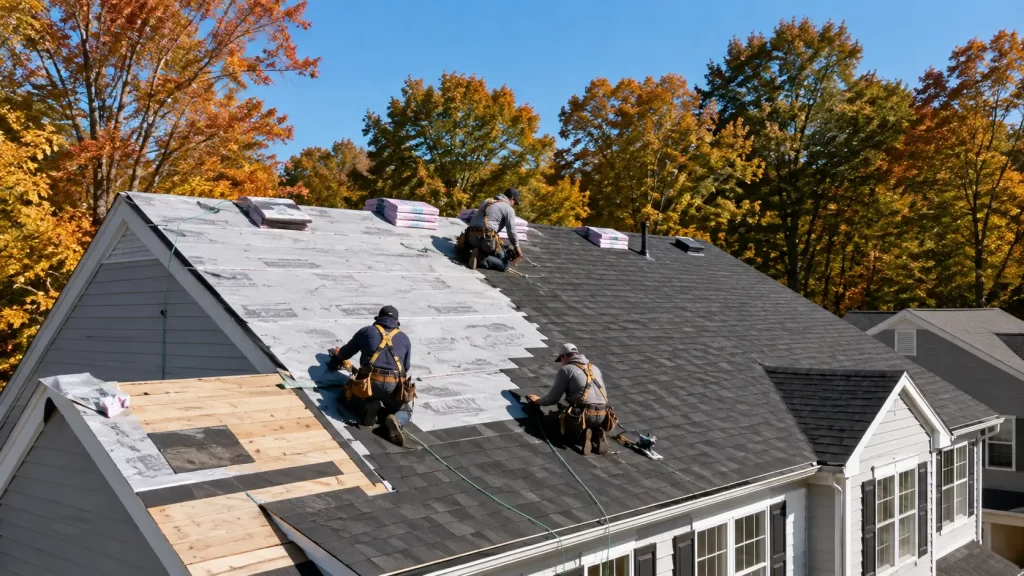
Roof replacement is one of the largest investments you’ll make in your home. Timing matters—not just for your budget and schedule, but for the quality and longevity of the installation itself. At Over The Top Roofing, we’ve installed hundreds of roofs across the North Shore over 25+ years, and we’ve learned that fall consistently delivers the best conditions for roof replacement in Massachusetts. Mild temperatures, stable weather, optimal material performance, and contractor availability all align to make September through early November the strategic window.
Most homeowners think summer is ideal—long days, warm weather, school vacation schedules. But summer brings extreme heat that stresses workers and materials, peak contractor demand that inflates prices and extends timelines, and afternoon thunderstorms that interrupt work unpredictably. Winter is obvious to avoid—cold prevents proper shingle sealing, snow delays projects, and short daylight hours limit productivity. Spring sounds reasonable but brings heavy rains and contractor backlogs from winter emergency repairs.
Fall splits the difference perfectly. Moderate temperatures allow materials to cure properly. Weather is more predictable. Contractors have capacity after summer’s rush but before winter storm season fills their emergency schedules. And completing your roof before winter protects your home when weather turns harsh. If you’ve been considering roof replacement, August is the time to plan for fall installation. Let’s walk through why this timing works, how to prepare, and what to expect.
Summary:
- The Fall Advantage: Weather, Timing, and Material Performance
- Planning Your Fall Roof Replacement Project
- Scheduling Your Consultation and Estimate
- Choosing Materials for New England Climate
- Understanding the Installation Timeline
- What to Expect During a Fall Roof Replacement
- Preparing Your Home for Installation
- Why You Shouldn’t Wait Until Winter
- Frequently Asked Questions
- Conclusion
The Fall Advantage: Weather, Timing, and Material Performance
Roofing materials—especially asphalt shingles—perform best when installed within specific temperature ranges. Most manufacturers specify 45-85°F for optimal adhesion and sealing. Fall in Massachusetts consistently delivers these conditions. September through early November averages 55-70°F across the North Shore, with lower humidity than summer and minimal precipitation compared to spring.
Why temperature matters: Asphalt shingles rely on heat-activated sealant strips to bond shingles together, creating a unified, wind-resistant surface. Too cold, and sealant won’t activate—shingles remain loose and vulnerable to wind uplift. Too hot, and shingles become overly pliable, difficult to handle, and prone to damage during installation. Fall’s moderate warmth allows perfect adhesion without the extremes.
Weather predictability is another critical factor. Fall storms in Massachusetts are less frequent and less severe than summer thunderstorms or spring nor’easters. Dry, stable weather allows crews to work efficiently without interruptions, complete tear-off and installation in consecutive days (reducing your home’s exposure), and ensure proper material curing before the first significant rain.
Contractor availability also peaks in fall. Summer’s backlog clears. Homeowners who delayed projects all year finally commit. But you’re ahead of winter’s emergency rush—storm damage, ice dam repairs, urgent leaks. Scheduling a fall project in August means you choose your preferred dates, avoid premium rush pricing, and work with crews who aren’t stretched thin across multiple emergencies.
Material performance extends beyond installation. Roofs installed in fall benefit from a “break-in” period before winter. Shingles settle, sealant fully cures, and any minor installation adjustments (natural settling, thermal expansion) happen during mild weather rather than extreme cold. By the time December arrives, your roof is fully bonded, tested by fall rains, and ready for snow load and ice.
This convergence—optimal installation conditions, predictable weather, contractor availability, and material performance—makes fall the strategic choice for roof replacement services in Massachusetts.
Planning Your Fall Roof Replacement Project
Success starts with early planning. Waiting until October to schedule a November installation limits your options. August and early September are the ideal windows to secure fall dates, choose materials thoughtfully, and prepare your home properly.
Scheduling Your Consultation and Estimate
Contact contractors in August for fall installation. During your consultation, expect a thorough roof inspection—surface condition, structural integrity, ventilation, flashing, and any hidden damage. Quality contractors provide written estimates detailing:
- Scope of work (tear-off, deck repairs, underlayment, shingle installation, flashing, ventilation, cleanup)
- Material specifications (shingle brand, type, color, warranty)
- Project timeline (start date, estimated duration, weather contingencies)
- Total cost (itemized, with payment schedule)
- Warranty coverage (workmanship and materials)
Get 2-3 estimates, but don’t choose solely on price. Evaluate experience, references, licensing, insurance, warranty terms, and communication quality. The lowest bid often means cut corners—inferior materials, rushed work, or unlicensed crews. At Over The Top Roofing, our estimates are transparent, detailed, and backed by 25+ years of proven craftsmanship. You know exactly what you’re getting, and why it’s worth the investment.
Schedule your installation for late September through early November. This gives contractors time to order materials, secure permits if needed, and plan crew availability—while still completing before winter.
Choosing Materials for New England Climate
Massachusetts roofs endure freeze-thaw cycles, ice dams, high winds, heavy snow loads, and intense UV exposure. Your material choice must match these demands.
Asphalt shingles (architectural/dimensional) are the most popular choice—affordable, versatile, effective. Look for shingles rated for high wind resistance (Class H or 130+ mph), impact resistance (Class 4 for hail-prone areas), and algae resistance (important in humid North Shore climates). Quality shingles carry 25-50 year warranties and come in dozens of colors to match your home’s style. Our shingle roofing options balance performance, aesthetics, and budget.
Metal roofing offers superior longevity (50+ years), excellent snow-shedding, and energy efficiency. It costs more upfront but outlasts asphalt by decades, requires minimal maintenance, and handles Massachusetts weather exceptionally well. Ideal for homeowners planning to stay long-term or seeking maximum durability.
EPDM rubber roofing suits flat or low-slope roofs common on additions, garages, or modern architectural designs. Highly durable, weather-resistant, and cost-effective for flat applications.
Discuss your priorities—budget, longevity, aesthetics, maintenance—with your contractor. They’ll match materials to your home’s specific needs, roof pitch, and local climate challenges. Quality contractors don’t upsell. They educate, so you make informed decisions.
Understanding the Installation Timeline
Residential roof replacements typically follow this sequence:
Day 1 — Tear-Off and Deck Prep
Crews arrive early, protect landscaping with tarps, and begin removing old shingles, underlayment, and damaged materials. Debris goes into a dumpster for daily removal (often included in your quote). Once tear-off is complete, the roof deck is inspected. Any rotted or damaged decking is replaced. The deck is swept clean, and new underlayment (felt or synthetic) is installed.
Day 2 — Installation
Shingle installation begins at the eaves and progresses upward in overlapping courses. Valleys, flashing (chimneys, vents, skylights), and ridge caps are installed with precision. Ventilation components (ridge vents, soffit baffles) are integrated as needed. Crews work methodically to ensure proper alignment, sealant activation, and wind resistance.
Day 3 — Final Details and Cleanup (if needed)
Complex roofs may require a third day for finishing details—custom flashing, multi-material transitions, or extensive repairs. Final cleanup includes magnetic sweeps for stray nails, debris removal, gutter cleaning, and site restoration. You receive a walkthrough to review the work and address any questions.
Weather can extend timelines—rain delays tear-off, high winds pause installation. Reputable contractors communicate proactively, adjust schedules transparently, and protect your home during any delays (tarps, temporary coverings).
Fall’s stable weather minimizes delays. Projects stay on schedule, reducing disruption and stress.
This comprehensive approach ensures your gutters aren’t just clean—they’re functional, reliable, and ready for months of heavy use.
What to Expect During a Fall Roof Replacement
Roof replacement is loud, disruptive, and unavoidable—but professional contractors minimize impact and communicate clearly. Here’s what happens:
Noise and vibration. Tear-off and nailing create significant noise. Expect 7-8 hours of activity per day. Vibration may shake walls and ceilings. If you work from home, plan accordingly—noise-canceling headphones, off-site work days, or flexible scheduling.
Debris and dust. Despite tarps and precautions, dust and small debris may enter your attic or filter through vents. Cover valuables in attic storage. Post-project cleanup includes vacuuming and debris removal, but proactive protection helps.
Driveway and yard access. Crews need space for material delivery (shingle bundles, dumpster), equipment staging, and vehicle parking. Clear your driveway and surrounding areas. Vehicles should be moved or garaged. Contractors provide advance notice of delivery timing.
Daily communication. Quality contractors check in at the start and end of each day—progress updates, any unexpected findings (deck damage, structural issues), timeline adjustments. You’re never left wondering what’s happening.
Safety protocols. Professional crews use fall protection, maintain organized work areas, and keep children and pets away from active zones. Your contractor ensures a safe site from start to finish.
The result? A roof installed to manufacturer specifications, backed by warranty, and ready to protect your home for decades. Expert roof replacement transforms your home’s most critical defense system—worth every hour of temporary disruption.
Preparing Your Home for Installation
Homeowners play a role in project success. Here’s how to prepare before crews arrive:
Clear access. Move vehicles, lawn furniture, grills, and outdoor equipment away from the house. Crews need perimeter access for ladders, material staging, and safety zones.
Protect valuables. Remove or cover items stored in your attic. Vibration during tear-off can shift boxes, knock over fragile items, or dislodge hanging objects.
Trim vegetation. Cut back overhanging tree branches that could interfere with installation or debris removal. Branches scraping against new shingles cause premature wear.
Inform neighbors. Give adjacent homeowners a heads-up about project timing, noise, and dumpster placement. Courtesy prevents complaints and maintains good relationships.
Secure pets. Keep dogs and cats indoors during installation. Noise, strangers, and open gates create escape risks. Pets also distract crews and create safety hazards.
Plan for disruption. If you have infants, elderly family members, or anyone sensitive to noise, consider off-site arrangements for installation days. Noise is unavoidable but manageable with planning.
Your contractor provides a detailed prep checklist during scheduling. Following it ensures smooth installation and minimizes stress.
Why You Shouldn't Wait Until Winter
Delaying roof replacement into late November, December, or beyond introduces serious risks:
Material performance. Cold temperatures prevent shingle sealant from activating. Shingles remain loose, vulnerable to wind uplift, and may not bond properly until spring warmth arrives—if at all. Manufacturers void warranties for installations outside specified temperature ranges.
Installation challenges. Cold makes shingles brittle and difficult to cut or handle. Workers’ productivity drops in freezing conditions. Snow, ice, and short daylight hours extend timelines unpredictably.
Weather exposure. Winter storms arrive with little warning. A roof mid-installation during a nor’easter means emergency tarping, potential water infiltration, and extended project delays.
Emergency pricing. Contractors prioritize emergency repairs (storm damage, ice dams, urgent leaks) in winter. Non-emergency replacements get pushed back or priced at premium rates to compensate for difficult conditions.
Hidden damage progression. If your roof is already compromised, waiting means more leaks, more interior damage, more structural rot. Every storm worsens the problem. Fall installation stops deterioration before winter accelerates it.
We’ve seen homeowners delay fall projects, suffer winter storm damage, and end up paying double—emergency repairs to stop leaks, then full replacement in spring. It’s avoidable. Roof replacement planning in August for fall installation protects your home and your budget.
Frequently Asked Questions
Why is fall the best time to replace a roof in Massachusetts?
Fall offers mild temperatures ideal for shingle adhesion, lower humidity for proper material curing, and reduced storm activity compared to summer. Contractors have better availability after summer’s peak season, and completing installation before winter protects your home from harsh weather. Fall conditions optimize both installation quality and scheduling convenience.
How long does a roof replacement take?
Most residential roof replacements complete in 2-4 days, depending on roof size, complexity, material choice, and weather. Tear-off and installation typically take 1-2 days. Additional time may be needed for structural repairs, complex flashing, or multi-material roofs. Experienced contractors provide accurate timelines during estimates.
Can I replace my roof in late fall or early winter?
Technically yes, but not ideal. Temperatures below 40-45°F prevent shingle sealant from activating properly, increasing risk of wind damage. Cold makes materials brittle and harder to handle. Snow, ice, and short daylight hours further complicate work. September through early November is the optimal window in Massachusetts.
How do I choose the right roofing material for Massachusetts climate?
Asphalt shingles (architectural or dimensional) are most common—affordable, durable, effective in freeze-thaw cycles. Metal roofing offers superior longevity and snow-shedding. EPDM rubber suits flat roofs. Consider warranty length, wind/impact ratings, aesthetic preferences, and budget. Experienced contractors match materials to your home’s specific needs.
What should I do to prepare my home for roof replacement?
Clear driveway and yard space for equipment and materials. Remove vehicles from garage or driveway. Protect valuables in attic from vibration. Cover outdoor furniture. Trim overhanging tree branches. Inform neighbors of project timing. Secure pets indoors. Your contractor provides a detailed prep checklist during scheduling.
Will roof replacement damage my landscaping?
Professional crews take precautions—tarps protect plants, debris is carefully removed, magnetized tools collect stray nails. Some minor impact (compacted soil from foot traffic) is unavoidable but minimal. Reputable contractors restore work areas to original condition and conduct thorough post-project cleanup.
Conclusion
Ready to protect your home with a fall roof replacement? Contact Over The Top Roofing today to schedule your consultation and secure your preferred installation dates. Serving Salem, Peabody, Beverly, and the North Shore with 25+ years of trusted expertise and industry-leading warranties. Call (978) 854-3418 or visit us online to start planning your project now.
