
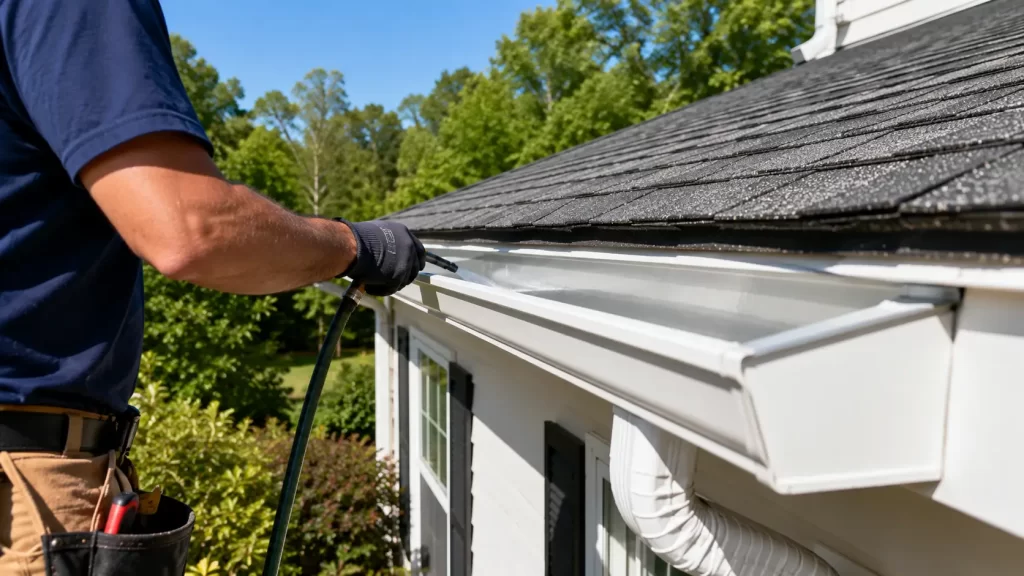
Gutters are easy to ignore—until they fail. Tucked along your roofline, doing quiet work day after day, they only demand attention when water pours over the edge, pools around your foundation, or leaks into your soffits. By then, damage is underway. At Over The Top Roofing, we’ve spent 25+ years protecting North Shore homes, and we’ve seen what happens when gutters are neglected. August maintenance is your chance to get ahead of fall’s challenges before they become emergencies.
Most homeowners wait until November to think about gutters—after leaves have clogged them, after fall rains have tested every weakness, after ice starts forming in downspouts. But August offers a smarter window. Summer debris is manageable. Contractors aren’t swamped. Weather cooperates for thorough work. You prepare your gutters for the season that tests them most, rather than reacting to failures mid-storm.
This isn’t about perfectionism. It’s about protecting your home’s structure, preserving your roof’s integrity, and avoiding expensive repairs that stem from $200 worth of preventable neglect. Let’s walk through why August matters, what proper gutter maintenance includes, and how it shields your home through fall and winter.
Summary:
- The Fall Leaf Problem: Why Timing Matters
- What August Gutter Maintenance Includes
- Cleaning Out Summer Debris
- Inspecting for Damage and Leaks
- Testing Downspout Flow and Drainage
- How Neglected Gutters Damage Your Roof and Home
- Gutter Guards: Are They Worth It?
- What to Expect from Professional Gutter Service
- Frequently Asked Questions
- Conclusion
The Fall Leaf Problem: Why Timing Matters
Fall in Massachusetts is beautiful—and brutal for gutters. Deciduous trees drop billions of leaves between late September and November, and a significant percentage land in your gutters. Once wet, they compact into dense mats that block water flow completely. Rain that should drain through downspouts instead spills over gutter edges, cascading down siding, pooling at your foundation, and infiltrating basements.
But the problem starts before leaves fall. Summer deposits pollen, seed pods, pine needles, shingle granules, and small twigs in your gutters. By August, this layer creates a base for fall leaves to cling to, accelerating clogs. If you clean in August, you remove that base. Early fall rains drain properly, and when leaves do arrive, they sit atop clean gutters rather than compounding existing blockages.
Timing also affects contractor availability. September through November is peak season for gutter cleaning across the North Shore. Schedules fill fast. Prices rise. If you wait until you notice a problem, you’re competing with hundreds of other homeowners for the same limited slots. August cleanings are easier to schedule, often cost less, and give you peace of mind before the rush.
Finally, August weather is stable. Warm, dry days allow thorough cleaning, detailed inspections, and immediate repairs without weather delays. Come October, rain interrupts work, and cold temperatures make sealants harder to apply. August is the strategic window—and homeowners who use it avoid the stress of reactive repairs.
What August Gutter Maintenance Includes
Professional gutter maintenance isn’t just scooping out leaves. It’s a systematic inspection and cleaning process that ensures your entire drainage system functions properly. Here’s what we do—and what you should expect from any professional gutter services provider.
Cleaning Out Summer Debris
We start by removing all accumulated debris—pollen, organic material, shingle granules, twigs, and any blockages in gutter channels. Debris is bagged and removed from your property, not blown onto your lawn or left in piles. Clean gutters mean water flows freely from roof edge to downspout without obstruction. Even small clogs reduce capacity, so thorough cleaning is non-negotiable.
Inspecting for Damage and Leaks
While gutters are clean, we inspect every section for damage: rust spots, cracks, separated seams, loose mounting brackets, sagging sections. Small leaks are sealed with professional-grade sealant. Damaged sections are flagged for repair or replacement. We check fascia boards (the wood behind gutters) for rot or water staining, which indicates chronic overflow or leaks. Catching damage in August allows repairs before fall rains worsen the problem.
Testing Downspout Flow and Drainag
Gutters are only half the system—downspouts must carry water away from your foundation effectively. We flush downspouts with water to confirm they’re clear, check that downspout extensions direct water at least 6 feet from your foundation, and verify proper gutter pitch (slight slope toward downspouts). Improperly pitched gutters pool water, accelerating rust and creating mosquito breeding grounds. We adjust pitch as needed to restore proper flow.
This comprehensive approach ensures your gutters aren’t just clean—they’re functional, reliable, and ready for months of heavy use.
How Neglected Gutters Damage Your Roof and Home
Gutters protect your home’s most vulnerable points: the roof edge, fascia, soffits, siding, and foundation. When they fail, damage spreads fast:
Roof edge rot. Overflowing gutters send water under shingles and behind fascia boards, rotting wood that supports your roof structure. Once rot starts, it spreads into roof decking, requiring costly structural repairs during roof replacement.
Ice dams in winter. Clogged gutters trap water that freezes, creating ice dams along roof edges. Ice dams force meltwater under shingles, leaking into attics and causing interior damage. Proper gutter drainage prevents ice dam formation by allowing water to exit the roof system before freezing.
Foundation damage. Water spilling over gutter edges saturates soil around your foundation, increasing hydrostatic pressure and causing basement leaks, foundation cracks, and settling. Gutter drainage solutions that direct water away from your home protect foundation integrity.
Siding and soffit damage. Chronic overflow stains siding, rots soffit boards, and peels exterior paint. Water infiltration through soffits reaches attic spaces, causing insulation damage and mold growth.
Landscape erosion. Concentrated water flow from clogged gutters erodes mulch beds, washes away topsoil, and damages plantings near your home’s perimeter.
We’ve seen homes where neglected gutters caused $10,000+ in combined roof, foundation, and interior repairs—all preventable with $400 worth of annual maintenance. It’s not a luxury. It’s essential infrastructure protection.
Gutter Guards: Are They Worth It?
Gutter guards are a common question during August maintenance consultations. The short answer: yes, for many North Shore homes—but they’re not a magic solution.
Quality gutter guard systems block large debris (leaves, twigs, acorns) while allowing water to flow into gutters. This dramatically reduces clogging and cuts maintenance frequency from twice-yearly to annual or less. For homes surrounded by trees—oaks, maples, pines—guards pay for themselves in reduced cleaning costs within 3-5 years.
However, guards don’t eliminate maintenance. Fine debris (shingle granules, pine needles, pollen) still accumulates and needs periodic cleaning. Poorly installed guards can trap debris on top, creating different clogs. And guards must match your gutter type and roof pitch to function properly.
We recommend guards for:
- Homes with heavy tree cover
- Two-story homes where gutter access is difficult or dangerous
- Homeowners who want to reduce maintenance frequency
- Properties prone to ice dams (guards help maintain drainage in freeze-thaw cycles)
We don’t recommend guards as a substitute for inspection and maintenance—just as a tool to make it less frequent and less intensive. Installed correctly, they’re a smart investment. Installed poorly, they create new problems. Choose experienced professionals who understand gutter guard systems and local climate challenges.
What to Expect from Professional Gutter Service
When Over The Top Roofing services your gutters, you’re getting 25+ years of experience applied to every detail. Here’s our process:
- Full gutter and downspout cleaning. We remove all debris, flush downspouts, and leave your system spotless.
- Comprehensive inspection. We check for damage, leaks, pitch issues, mounting bracket stability, and fascia condition.
- Minor repairs on-site. Small leaks, loose brackets, and pitch adjustments are corrected during the visit.
- Detailed reporting. You receive a written report with photos, findings, and recommendations for any major repairs or upgrades.
- Transparent recommendations. If gutter guards, replacement sections, or drainage extensions would benefit your home, we explain why—with no-pressure pricing and options.
- Warranty-backed work. All repairs and installations carry our industry-leading warranty, giving you long-term confidence.
Most residential gutter maintenance takes 2-4 hours, depending on home size and gutter length. Scheduling is flexible. Pricing is transparent. And you get the peace of mind that comes from knowing your home is protected before fall’s first storm.
Seasonal gutter cleaning isn’t just about gutters—it’s about preserving your roof, foundation, and overall home value.
Frequently Asked Questions
Why should I clean gutters in August instead of waiting until fall?
August cleaning removes summer debris—pollen, seed pods, small twigs—before fall leaves arrive. Clean gutters in August handle early fall rains better, and you avoid the seasonal rush when contractors are booked solid. Proactive maintenance prevents clogs that cause overflow, roof damage, and foundation issues.
What happens if I skip gutter maintenance before fall?
Clogged gutters overflow during fall rains, sending water under roof edges, into soffits, and down foundation walls. This causes rot, mold, ice dams in winter, and basement flooding. Neglected gutters also sag under debris weight, pulling away from fascia and requiring costly repairs.
How often should Massachusetts homeowners clean gutters?
Twice yearly minimum—spring and late summer/early fall. Homes near heavy tree cover may need quarterly cleanings. August cleaning prepares for fall leaves; spring cleaning clears winter debris. Regular maintenance extends gutter lifespan and prevents emergency repairs.
Do gutter guards eliminate the need for cleaning?
No, but they reduce frequency. Quality gutter guards block large debris (leaves, twigs) while allowing water flow. You’ll still need periodic cleaning for small debris (shingle granules, pine needles), but annual maintenance often suffices instead of twice-yearly. Guards are a smart investment for tree-heavy properties.
Can clogged gutters damage my roof?
Yes. Overflowing gutters allow water to back up under shingles, rot fascia and soffit boards, and saturate roof edges. In winter, trapped water freezes into ice dams that force water under shingles and into your home. Gutter maintenance is roof maintenance—they work together.
What does professional gutter maintenance include?
Professionals remove all debris, flush downspouts to confirm drainage, inspect for leaks or damage, test gutter pitch for proper flow, check mounting brackets for stability, and seal minor leaks. You receive a detailed report and recommendations for repairs or upgrades if needed.
Conclusion
Protect your home before fall leaves arrive. Contact Over The Top Roofing for professional gutter maintenance backed by 25+ years of North Shore expertise. Serving Salem, Peabody, Beverly, and beyond. Call (978) 854-3418 or visit us online to schedule your August gutter service today.
