
Metal roof measurement in Peabody is an essential step for anyone looking to install or replace a metal roof. Our goal is to ensure that the measurements are accurate, so you save time and money on materials and installation. We need to carefully measure the areas to determine the correct size and amount of metal roofing needed, making sure all sections, including porches and overhangs, are covered.
Contact us at 617-618-6723 for a free estimate on your metal roof measurement in Peabody.
Understanding how to take proper measurements can seem daunting at first, but it’s quite manageable when broken down into simple steps. Drawing a top-down view of your roof, marking all the features, and using basic geometric formulas like length times width for rectangular sections are key techniques for metal roof measurement in Peabody.
We also need to consider local building codes and regulations, which can influence the type of materials we use and how they’re installed. Consulting with professional services in Peabody can provide peace of mind, ensuring that every aspect of your metal roof measurement is up to standard and accurately recorded.
Key Takeaways
- Accurate measurements save time and money.
- Local codes in Peabody affect material choices and installation.
- Professional services offer reliable and precise measurement assistance.
Understanding Metal Roofing
When it comes to metal roof measurement in Peabody, knowing the types of metal roofs and their benefits is crucial. Each type offers distinct advantages suited to different needs and climates.
Types of Metal Roofs
Metal roofs come in several types, including standing seam, metal shingles, and corrugated metal panels.
- Standing Seam: This type features raised seams and is known for its sleek look and durability.
- Metal Shingles: These mimic traditional shingle roofs but offer metal’s longevity and strength.
- Corrugated Metal Panels: Often used in industrial settings, these are durable and cost-effective.
Choosing the right type depends on your aesthetic preference, budget, and specific needs for metal roof measurement in Peabody.
Benefits of Metal Roofs in Peabody
Metal roofs offer several benefits, especially in a place like Peabody with its diverse weather conditions.
Durability: Metal roofs withstand severe weather, including heavy rain and snow, common in Peabody.
Energy Efficiency: They reflect sunlight, reducing cooling costs during hot summers.
Low Maintenance: Metal roofs require minimal upkeep compared to traditional roofing, saving time and money in the long run.
Longevity: A well-installed metal roof can last 40-70 years, making it a solid investment for homeowners in Peabody.
These benefits align with what we prioritize in metal roof measurement in Peabody, ensuring we deliver reliable and efficient roofing solutions.
Preparation for Measurement
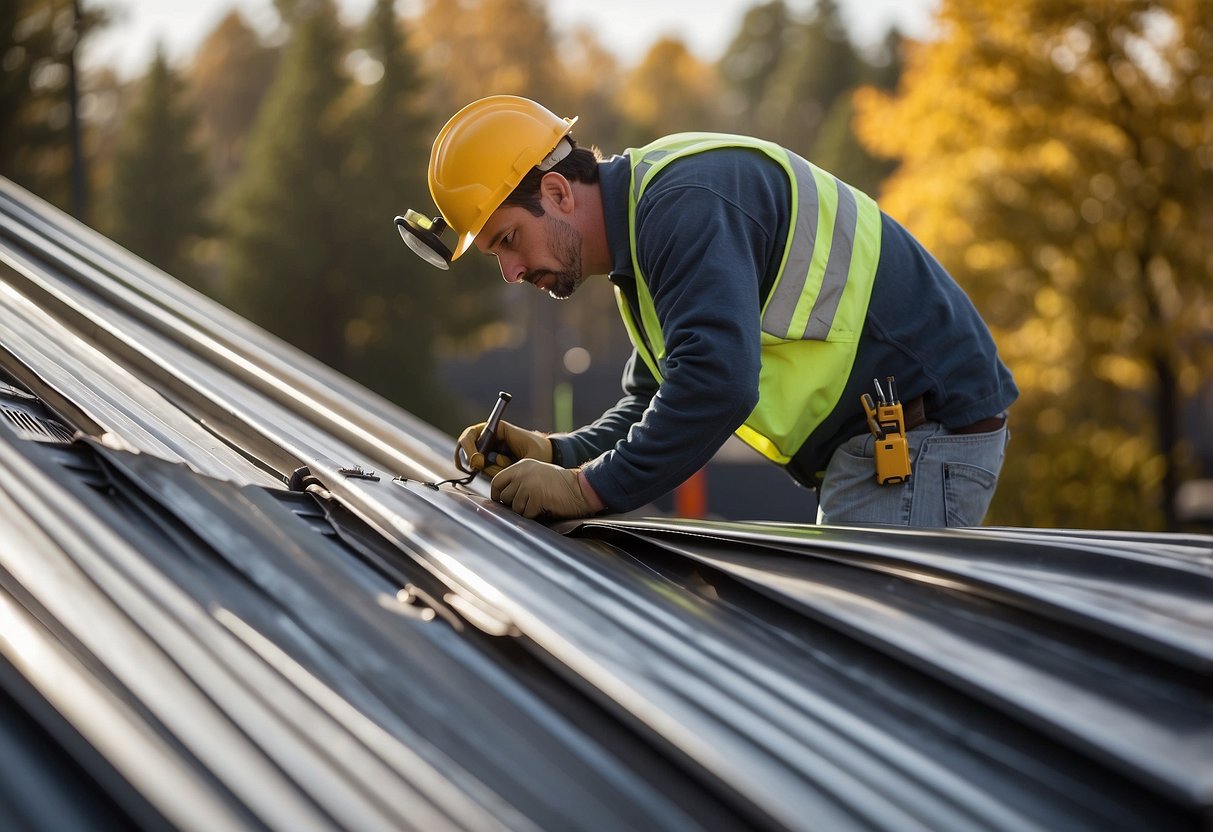
Proper preparation is crucial to ensure accurate metal roof measurement in Peabody. We’ll discuss key safety considerations and necessary tools to help you get started.
Safety Considerations
Safety should always be our top priority when performing metal roof measurement in Peabody. Start by examining the weather conditions. Avoid working on the roof during rain, snow, or when the roof is wet.
Wear proper clothing and non-slip shoes. Harnesses and safety ropes are essential when working on steep roofs. Ensure these are in good condition before use.
Set up a stable ladder on flat ground. To prevent accidental falls, always have someone hold the ladder steady. We should also wear gloves to protect our hands from sharp edges on the metal roof.
Tools and Equipment Required
Accurate metal roof measurement in Peabody requires specific tools and equipment. You will need a measuring tape for determining lengths and widths, and a calculator to help with area calculations. A notebook or design planning app can assist with noting dimensions and features.
A level is necessary for checking roof pitch, while a chalk line helps mark straight lines on the roof surface. For visual reference, carry a camera or smartphone to snap pictures of complex areas.
Keep safety equipment like harnesses, ropes, and gloves handy. This ensures we can perform measurements safely and accurately.
By knowing the best safety practices and having the right tools, we can effectively carry out metal roof measurements in Peabody.
Measuring Techniques
Measuring a roof correctly is essential when preparing for a metal roof measurement in Peabody. We will cover the specific techniques to ensure accurate dimensions, area calculations, and pitch considerations.
Linear Measurements
For accurate linear measurements, we start by measuring the length from the eaves to the ridge. This gives us the vertical span. To get the width, we measure along the eaves where the roof meets the gutter.
We must measure each plane of the roof separately if it is not a perfect rectangle. This often requires additional steps and careful attention. These steps are crucial to avoid miscalculations and ensure the right amount of material is purchased.
Area Calculation Methods
When performing a metal roof measurement in Peabody, calculating the total area involves adding the dimensions of each roof plane. We multiply the length by the width of each plane to get the square footage.
After calculating each plane, we add them together for the total area. This process must be precise, as it determines how much material we need to order. Missteps can lead to wasted resources or material shortages.
Slope and Pitch Considerations
Understanding the slope and pitch is vital. We measure the pitch by determining the rise over a 12-inch run. This means figuring out how many inches the roof rises vertically for every 12 inches it extends horizontally.
Roof pitch affects how much metal roofing material we need and impacts the installation process. In Peabody, where roof designs can vary, accurate measurements ensure proper material and fit. It’s essential for durability and performance.
By following these techniques, we ensure that our metal roof measurement in Peabody is both accurate and efficient.
Assessing the Roof Structure
Before starting a metal roof measurement in Peabody, we need a clear idea of the roof’s structure and features. Accurate measurement and understanding of the design will ensure proper material estimates and installation.
Identifying Roof Features
When we perform a metal roof measurement in Peabody, the first task is to identify all major features. We need a top-down drawing of the roof, noting all parts such as the main sections, porches, overhangs, and dormers.
Using measurements in feet and inches, we outline each rectangular or square section accurately. It’s essential to ensure that the drawing includes all angles and slopes. Roof pitch should always be noted since it influences the choice of materials. For precision, tools like a pitch meter come in handy, and seeking professional help might be wise if the angles are complex.
Accounting for Roof Penetrations
Next, during a metal roof measurement in Peabody, we account for any penetrations. Penetrations include chimneys, vents, skylights, and any other items that break through the roof surface. Each of these requires special attention and adjustment in our measurements.
We should sketch each penetration on our top-down drawing, noting their exact size and position. It’s important to measure around these areas multiple times to ensure accuracy. These penetrations can disrupt the flow of the metal roofing, so we must plan for the necessary cuts and flashing to ensure a watertight seal. Proper documentation at this stage can save time and avoid errors during installation.
Material Estimation
Material estimation for a metal roof involves calculating the number of panels needed and considering other materials and costs involved.
Panel Quantity and Sizing
When estimating the panel quantity for metal roof measurement in Peabody, we start by measuring the total roof area. We multiply the length by the width for each section, and then we sum these areas to get the total square footage.
We then determine the roof pitch, which affects the amount of material needed. Common pitches are 4/12, 6/12, and 8/12. Using these pitches, we apply a conversion factor to adjust for actual material coverage.
For example, if we have a roof with a pitch of 6/12 and a total area of 2,000 square feet, and we use panels that cover 12 square feet, we would need approximately 167 panels. We always round up to ensure enough material.
Additional Materials and Overhead
In addition to the panels, other materials needed for metal roof measurement in Peabody include fasteners, flashing, underlayment, and insulation.
Fasteners secure the panels, and flashing helps prevent water intrusion at joints and edges. Underlayment provides an extra barrier against moisture, and insulation improves energy efficiency.
Case studies show that fasteners can account for 5-10% of material costs. Flashing and underlayment are usually priced per linear foot, while insulation varies based on type and thickness.
Lastly, we consider labor and potential waste, often adding a 10-15% overhead to our total material estimate to cover any unforeseen expenses. This ensures a complete and accurate budget for our project.
Documentation and Reporting
Accurate documentation is essential when performing metal roof measurements in Peabody. We will outline how to create a roofing diagram and document the detailed measurements.
Creating a Roofing Diagram
First, we start by creating a visual representation of the roof. This diagram should include labels for different sections and features such as vents, chimneys, and skylights.
We must use precise measurements for each section of the roof. Using tools like measuring tapes or laser distance meters helps ensure accuracy.
For complex roof designs, breaking down the roof into smaller sections can simplify the process. Each section should be marked and measured individually.
This method helps us in making sure that every detail is recorded accurately for metal roof measurement in Peabody.
Detailing the Measurements Report
After the diagram is complete, we must compile the measurements into a detailed report. This report should include the area of each section of the roof.
We use standardized units like square feet or square meters for consistency. Each measurement should be double-checked for accuracy.
In the report, it’s helpful to use tables and bullet points to organize the data. For instance:
| Section Name | Length (ft) | Width (ft) | Area (sq ft) |
|---|---|---|---|
| Section A | 20 | 15 | 300 |
| Section B | 25 | 10 | 250 |
This detailed reporting helps us in providing clear and precise information for metal roof measurement in Peabody.
Local Building Codes and Regulations
When we discuss metal roof measurement in Peabody, it’s crucial to understand local building codes and regulations. These rules ensure safety and compliance for all construction projects.
Massachusetts State Building Code
We must follow the Massachusetts State Building Code, which covers all aspects of construction including roofing. For metal roofs, it mandates proper installation techniques and materials to ensure durability and safety.
City of Peabody Zoning Ordinance
The City of Peabody Zoning Ordinance provides additional guidelines. This ordinance may influence roof design, such as height and material restrictions, which we need to consider when planning a metal roof measurement in Peabody.
Roofing Layers
According to the Massachusetts State Building Code, there is a limit of two layers of roofing material. This means when measuring for a metal roof, we must account for any existing layers that may need to be removed.
Fasteners and Materials
The state code also specifies the types of fasteners allowed. For metal roofs, approved fasteners include galvanized, stainless steel, aluminum, or copper nails. These nails must penetrate the roofing material adequately.
Insurance Requirements
Contractors in Peabody require liability insurance of at least $500,000. If the contractor has employees, workers’ compensation insurance is mandatory. When we hire contractors for metal roof measurement in Peabody, verifying insurance coverage protects both parties.
Common Challenges in Metal Roof Measurement
When addressing metal roof measurement in Peabody, we often face a variety of challenges. Precise measurement is crucial, but it’s not always easy.
One common challenge is dealing with irregular roof shapes. Houses in Peabody often have complex architectural designs, making measurements tricky. We need to measure each section accurately to avoid errors.
Another challenge is the difficulty of accessing certain areas. Some roof sections are hard to reach safely. This requires careful planning and sometimes specialized equipment.
Weather conditions in Peabody can also complicate measurements. Rain, snow, or even strong winds can affect the accuracy and safety of our work.
Common Challenges:
- Irregular roof shapes
- Inaccessible areas
- Weather conditions
We must also consider thermal expansion. Metal expands and contracts with temperature changes, so our measurements need to account for this. Inaccurate measurements can lead to issues like water pooling or leaks.
Measurement Tools:
It’s essential to use the right tools for accurate metal roof measurement in Peabody. Common tools include:
- Measuring tape
- Laser distance meter
- Level
In Peabody, ensuring accurate measurements is vital to avoid costly mistakes. Miscalculations can lead to material wastage or improper installation, costing both time and money. Therefore, attention to detail and proper planning are key factors to successful metal roof measurement in Peabody.
Professional Measurement Services in Peabody
We provide expert metal roof measurement in Peabody to ensure accurate and efficient roofing projects. Precise measurements are crucial for a perfect fit and optimal performance.
Our team uses advanced tools and techniques for metal roof measurement in Peabody. We employ laser measuring devices, drones, and other equipment for accuracy and efficiency.
Benefits of Professional Measurement:
- Accuracy: Minimize material waste and avoid costly mistakes.
- Efficiency: Speed up the installation process by having exact measurements from the start.
- Customized Solutions: Tailored measurements that fit your unique roofing needs.
Why Choose Us:
- Experienced Professionals: Over 30 years in the roofing industry.
- Specialized Tools: Utilizing the latest technology for precise measurements.
- Customer Satisfaction: Dedicated to delivering top-notch services.
We understand the importance of accurate metal roof measurement in Peabody. Our expertise ensures that your metal roof fits perfectly, providing long-lasting protection and aesthetic appeal.
Frequently Asked Questions about Metal Roof Measurement in Peabody
In this section, we address some common questions about metal roof measurement in Peabody. We’ll cover procedures, tools, and considerations needed for accurate measurements.
What is the proper procedure for measuring the area of a metal roof?
To measure the area of a metal roof, we need to find the length and width of each roof section. For rectangular sections, multiply length by width. Other shapes may require dividing them into smaller rectangles or triangles.
How can I determine the amount of roofing material needed for my project?
For metal roof measurement in Peabody, calculate the total area by summing up the areas of all roof sections. Add an extra 10-15% to account for wastage and overlaps. This will give us an estimate of the total material needed.
What tools are required for accurate metal roof measurements?
We use a measuring tape, notepad, pen, ladder, level, and calculator. A digital measuring tool can also be helpful for more precise measurements. For safety, a harness and non-slip shoes are essential.
How do I account for roof features like valleys and hips when measuring?
For metal roof measurement in Peabody, measure the length of valleys and hips separately. These features require additional materials. Ensure we add these measurements to the total square footage to avoid shortages during installation.
Can you explain how to calculate the pitch of a metal roof for material estimation?
To calculate the pitch, measure the vertical rise over a 12-inch horizontal run. For example, if the rise is 6 inches, the pitch is 6/12. Use this information to adjust the total area estimated for our metal roof measurement in Peabody.
What factors should be considered when selecting the gauge and type of metal roofing?
When selecting the gauge and type of metal roofing, we consider climate conditions, the roof’s structural support, and local building codes. In Peabody, choosing the right gauge ensures long-term durability and efficiency in extreme weather conditions.
